
Phillip Millis: the 1927 Hennessey family deaths
In December 1927, seven members of one family were found dead in Hennessey, Oklahoma. They were Phillip Noble Millis, his wife and their five children. Historical records attribute the deaths of the six family members to Millis, who then took his own life. Because he died, he was never charged, tried or sentenced, and no court ever tested the account. This article sets out what the surviving records say and what they leave unanswered.
Who was Phillip Noble Millis?
Genealogical records indicate that Phillip Noble Millis was born on 6 September 1892 in Orange, Clark County, Illinois, the son of William Edward Millis and Eliza Louisa Brubeck. He later settled in Oklahoma. Family-tree entries show that he married Minnie Arya Carson, born in 1893, and that the couple had five children. At the time of his death he was 35.
Local accounts place the family in the Hennessey area of Kingfisher County, in the Union Chapel neighbourhood. The records available give little detail about their daily lives, and this article does not fill that gap with guesswork.
What happened in December 1927
Published lists of mass-casualty incidents in the United States record the event as taking place in Hennessey on 12 December 1927, with seven people dead and nobody else injured. A local history of Hennessey and a genealogical entry give 13 December instead. The discrepancy is common in historical cases where the deaths were discovered some time after they occurred, and the exact hour is not established in the sources consulted.
All of the victims were relatives of Millis: his wife and their five children. The youngest was a baby of about five months. Among the others were twins, a boy named Burl and a sibling born in 1914, who were 13 at the time of their deaths. After the killings, Millis took his own life.
The sources do not give a reliable account of why this happened, and it would be wrong to offer one. No statement from Millis or any court findings are available to explain it.
The funeral and the community response
The community's reaction is better documented than the events themselves. A local account records that funeral services were held at 2.00pm on 16 December at the Hennessey Methodist Church. Ministers from Hennessey and nearby Tryon led the service. The account says more than 1,500 people attended. The church was full, and hundreds more stood outside.
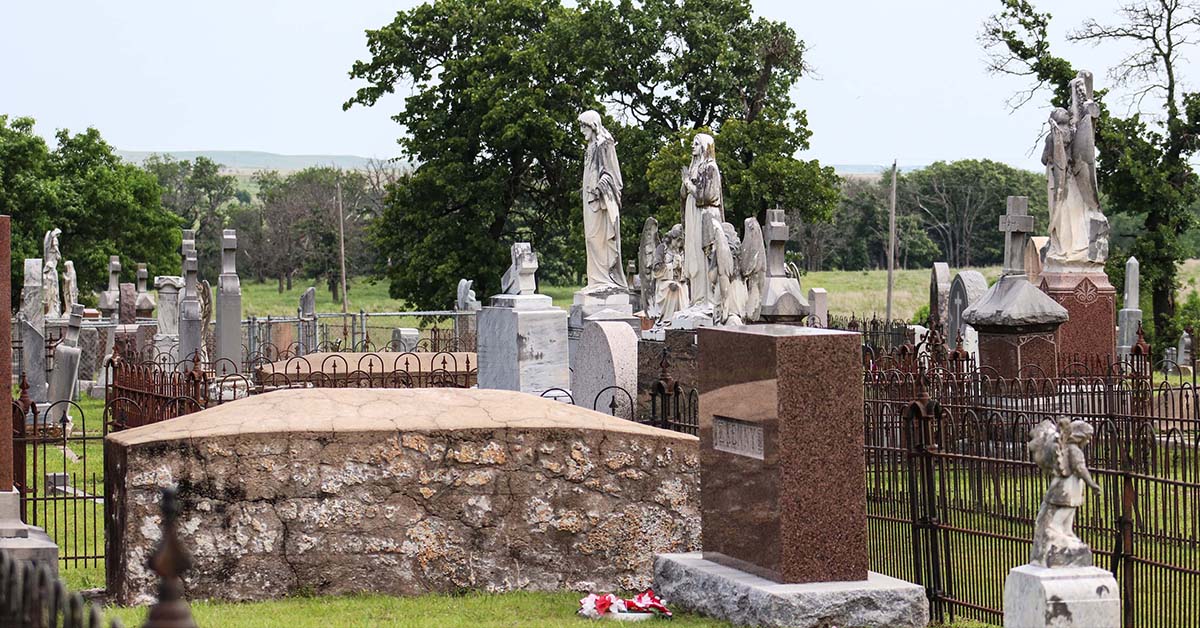
There were five caskets. The mother and her infant son shared one, and the two youngest children, Wayne and Marie, shared another. Five hearses were used, and the funeral procession is said to have stretched for miles. Friends and neighbours from the Union Chapel area dug the graves on the north side of Hennessey Cemetery. After a short address and a hymn, the family were laid to rest.
Mourners took a little over an hour to file past the open caskets, a detail that suggests how widely the loss was felt in a small farming community.
Why there was no trial
In common-law systems such as those of the United States and England and Wales, a criminal prosecution requires a living defendant. When a suspect dies, no charge can proceed and no verdict is possible. Any official inquiry in such a case is aimed at establishing the cause and circumstances of each death, not at deciding guilt in the way a trial does.
This is why careful language matters with historical cases like this one. Millis was never convicted of anything. Describing him as responsible reflects what contemporary and later records say, not a finding made by a court. Where sources differ, as they do on the date, it is fairer to say so than to choose one version and present it as settled.
How the case is recorded today
The deaths are listed in compilations of mass killings in the United States from the 1920s, usually in a single line giving the date, the place and the number of dead. Local history volumes and cemetery transcriptions preserve the funeral account and the names of the family. Genealogical databases hold the dates of birth and death for Millis, his wife and their eldest children.
Compilers handle the facts differently. One list puts the date at 12 December, while a local history gives 13 December. Researchers wanting certainty would have to consult original records, such as death certificates and contemporary newspapers. Details about the method and sequence of events are also left out of this article, because the sources are brief and an account built on them would be unreliable.
A closing note
The Millis case belongs to a group of family killings from the early twentieth century that ended without a courtroom. There was no trial, no testimony and no sentence, so the written record rests on brief news reports, local histories and family documents. What can be said with confidence is limited. Seven members of one family died in Hennessey in December 1927, all the victims were relatives of the man held responsible, and he died by suicide. The funeral drew a very large crowd. Beyond that, the reasons and the full circumstances remain unrecorded in the material available.