
Harold Shipman: the GP convicted of 15 murders, 1975–1998
Harold Frederick Shipman, a general practitioner (GP) from Hyde in Greater Manchester, was convicted on 31 January 2000 of murdering 15 of his patients. He was sentenced to life imprisonment with a whole life order, which means he was never to be released. A later public inquiry found that he had killed many more people over about 23 years, between 1975 and 1998. It identified 218 victims. He remains the only British doctor convicted of murdering his patients.
Background and early career
Shipman was born in Nottingham on 14 January 1946. He studied medicine at the University of Leeds and graduated in 1970. After hospital work in Pontefract, he took his first post as a GP in Todmorden in 1974.
In 1975 he was caught forging prescriptions for the opioid pethidine for his own use. He was fined £600 and briefly attended a drug rehabilitation clinic. He then moved to a practice in Hyde in 1977, and in 1993 he opened his own surgery on Market Street. He was regarded locally as a respected family doctor.
The killings
The Shipman Inquiry found that he targeted elderly and often otherwise stable patients who trusted him. He killed them with lethal doses of drugs, usually diamorphine, which is medical-grade heroin. The inquiry dated his earliest identified killing to 1975, during his time in Todmorden. Most victims died in Hyde, many at home, and a large majority were women.
Shipman then signed the death certificates himself, usually giving natural causes or old age. Because he was the doctor who last saw many of the patients, there was little outside scrutiny of the deaths.
How suspicion arose
In March 1998, a Hyde GP, Dr Linda Reynolds, raised concerns with the coroner for the South Manchester District about the number of Shipman's patients who had died, and about the cremation forms he had asked colleagues to countersign. Greater Manchester Police looked into the matter but found no sufficient evidence and closed the inquiry on 17 April 1998. The later inquiry criticised the force for giving the case to inexperienced officers.
His last victim was Kathleen Grundy, a former mayoress of Hyde, who was found dead at her home on 24 June 1998. Shipman had been the last person to see her alive. Her daughter, a solicitor, became worried when she learned of a will, apparently made by her mother, that left her estate of £386,000 to Shipman and excluded her family. The will was doubted, and police began a new investigation. Mrs Grundy's body was exhumed and found to contain diamorphine. Shipman was arrested on 7 September 1998.
Trial and sentence
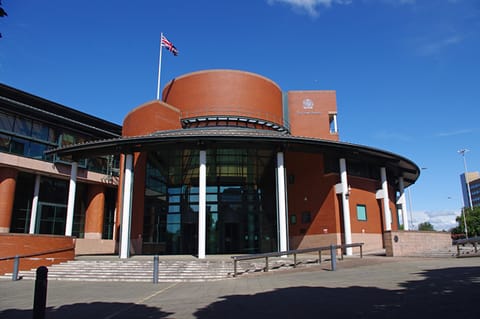
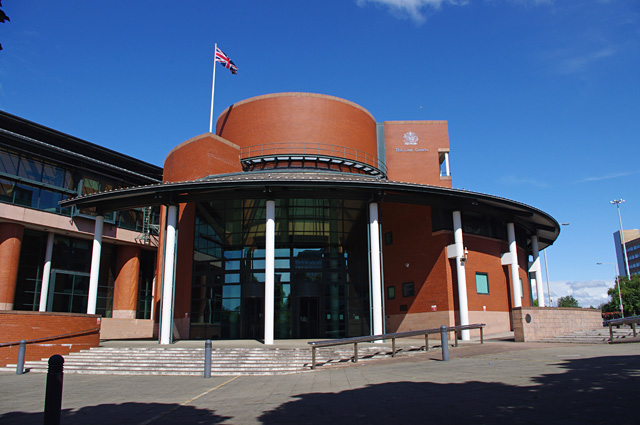
The trial was held at Preston Crown Court. The prosecution brought 15 counts of murder, each relating to a patient who died between 1995 and 1998, together with a charge of forging Mrs Grundy's will. Shipman pleaded not guilty and maintained his innocence throughout. He never admitted to any killing.
On 31 January 2000, the jury returned guilty verdicts on all 15 murder counts and on the forgery charge. The judge, Mr Justice Forbes, sentenced him to 15 terms of life imprisonment and to four years for forgery. He told Shipman that he should never be released, and the whole life order meant there would be no tariff period after which parole could be considered.
The Shipman Inquiry
The government ordered a public inquiry into the deaths. It was chaired by a High Court judge, Dame Janet Smith, and examined deaths certified by Shipman across his career in Todmorden and Hyde. Its work took several years and was published in a series of reports. Dame Janet identified 218 victims in total, far more than the 15 for which he was convicted. Other estimates have put the figure higher. The inquiry said that for some deaths the evidence was not strong enough to reach a firm conclusion.
The inquiry also looked at how he escaped detection for so long. It examined how deaths were certified, how cremations were authorised, how controlled drugs were monitored and how doctors were regulated. Its criticisms led to reforms of death certification and of the systems for monitoring GPs and their prescribing of controlled drugs.
Death in prison
Shipman was held at HM Prison Wakefield in West Yorkshire. On 13 January 2004, one day before his 58th birthday, he was found hanged in his cell. He was 57. His death meant that he did not live to see the inquiry's final conclusions. Families of the victims said they had been denied the chance to hear him account for his actions, and he never explained his crimes.
Legacy
The Shipman case changed how medicine is overseen in England and Wales. Death certification, the checks before cremation, the handling of controlled drugs and the sharing of concerns between professionals were all reviewed in its wake. The case is still cited when professional regulation, patient trust and the scrutiny of doctors are discussed.
For the families of those he killed, the effect was lasting, and many only learned the truth years after their relatives died. The conviction rested on 15 cases that could be proved in a criminal court, while the inquiry set out a much wider account of what had taken place in Hyde and Todmorden.