
Guilty, not guilty, no contest: what a plea means in a criminal court
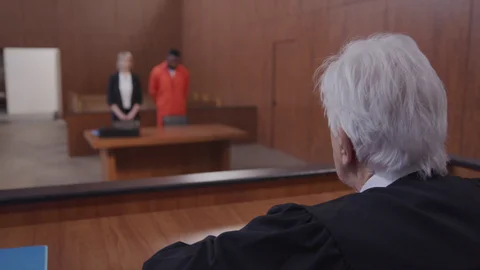
When a defendant first answers a charge in court, the answer is called a plea. It is a short, formal statement, but it decides whether the case moves towards a trial or straight to sentence. This article explains the main types of criminal plea, what each one means in law, and how the rules differ between countries.
What a plea is and why it matters
A criminal plea is the defendant's official response to the charge or charges brought by the prosecution. It is usually entered at an early hearing, often called an arraignment in the United States and a plea hearing in England and Wales. The defendant normally speaks through a lawyer, though in some systems the defendant must confirm the plea personally.
The plea matters because it sets the course of the case. In ordinary court procedure, an admission of guilt removes the need for a trial on that charge. A denial requires the prosecution to prove its case. Until a conviction, a person who is charged with an offence is presumed innocent, whatever plea is entered.
The guilty plea
A guilty plea is a formal admission that the defendant committed the offence charged. Once the court accepts it, the defendant is convicted without a trial. The court then moves to sentence, sometimes at once and sometimes after reports on the defendant's background.
Courts take care that a guilty plea is genuine. In the United States, a judge typically questions the defendant to check that the plea is voluntary and that the person understands the charge, the possible penalty and the rights being given up. These include the right to a trial, to confront witnesses and to stay silent. A judge may refuse a plea that does not appear to be made freely or that has no factual basis.
In England and Wales, an early guilty plea usually brings a lower sentence. Under the Sentencing Council's guideline, the court can reduce the penalty by up to a third if the plea comes at the first stage of proceedings. The reduction shrinks the later the plea is entered. The reasoning is that an early admission saves court time and spares witnesses and victims from giving evidence.
Pleading to a lesser charge
A defendant may offer to plead guilty to a less serious offence, or to some counts on an indictment but not others. The prosecution and the court must agree. This often follows discussions between lawyers, a practice that varies widely between legal systems.
The not guilty plea
A not guilty plea is a denial of the charge. It does not necessarily mean the defendant claims to be innocent in every respect. It means the defendant requires the prosecution to prove guilt to the legal standard. A defendant may enter it because they dispute the facts, because they rely on a legal defence such as self-defence, or because they believe the evidence is not strong enough.
After this plea, the case is prepared for trial. The court sets dates, deals with disclosure of evidence and decides whether the trial will be before a judge alone or a jury. In England and Wales, a defendant who refuses to answer, known as standing mute, is treated as having pleaded not guilty. Many US courts do the same.
A not guilty plea can be changed later. Some defendants plead guilty after seeing the prosecution evidence, and the court may still take that into account at sentence, though with less credit in some systems.
The no contest plea
A no contest plea, known in Latin as nolo contendere, means the defendant does not dispute the charge and accepts conviction, but does not formally admit guilt. It exists in US federal courts and in many state courts. It is generally not part of criminal procedure in England and Wales.
In most places the court must agree to accept it, and the judge usually considers the views of the prosecution and the public interest. The legal result in the criminal case is typically the same as a guilty plea: a conviction and a sentence. The difference often lies in later civil proceedings. In many US jurisdictions, a no contest plea cannot be used as an admission of liability in a related civil claim, although rules differ and some convictions can still have civil consequences.
The Alford plea
A related option in some US courts is the Alford plea. The defendant says they are not guilty but accepts that the prosecution has enough evidence for a likely conviction. The court treats it as a conviction. It differs from a no contest plea mainly because the defendant expressly maintains innocence.
Can a plea be withdrawn?
Courts do not treat a plea as a casual decision. Withdrawing a guilty plea is usually possible only with the court's permission, and it is easier before sentence than after. Common grounds include pressure, a misunderstanding of the charge, or poor legal advice. After sentence, a defendant normally has to go through an appeal or a similar review process, and the time limits can be strict.
Why the details matter
The words used in court can look similar from the public gallery, but each plea carries different legal consequences for the defendant, the victim and the court. A guilty plea ends the dispute over whether the offence occurred. A not guilty plea tests the evidence. A no contest plea ends the criminal case without a formal admission. Understanding these differences makes it easier to follow what is happening in a hearing and why the next stage unfolds as it does.