
How miscarriages of justice are reviewed in England and Wales
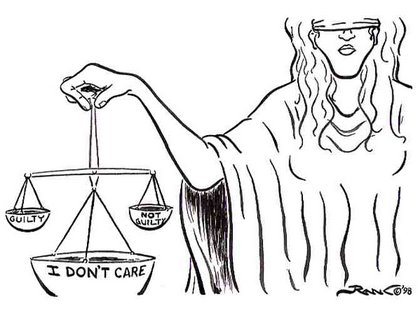
A miscarriage of justice happens when someone is convicted or punished for something they did not do, or when a conviction results from a serious failure in the process. In England and Wales there is no single procedure for putting these cases right. There is a layered system of appeals, an independent investigating body and, in rare cases, political powers. This article explains how each stage works and where its limits lie.
The first line of defence: ordinary appeals
Most challenges to a conviction begin with a normal appeal. The route depends on where the case was heard.
Cases heard in the Crown Court
A person convicted at the Crown Court, which deals with the most serious criminal cases, may ask the Court of Appeal (Criminal Division) to consider their case. They generally need permission, and the application must normally be made within 28 days. The court can extend that period, but it expects a good reason for any delay.
Cases heard in a magistrates' court
Someone convicted in a magistrates' court can usually appeal to the Crown Court, where the case is reheard. A challenge on a point of law can instead be taken to the High Court.
The Supreme Court
A further appeal to the Supreme Court is possible only if the case raises a point of law of general public importance and permission is granted. It is not a general second chance to argue the facts.
What the Court of Appeal asks
In a conviction appeal, the central question is whether the conviction is unsafe. The judges are not asked to decide afresh whether the defendant is guilty. They ask whether there is a real concern that the verdict cannot be relied upon. Typical grounds include:
- a significant error by the trial judge, such as wrong directions to the jury;
- evidence that should not have been admitted, or that was wrongly excluded;
- failures by the police or prosecution, including non-disclosure of material that might have helped the defence;
- fresh evidence that was not available at trial.
The court has discretion over fresh evidence and considers whether it is capable of belief and whether it might have affected the jury's decision. If it allows an appeal, it can quash the conviction. It can also order a retrial, in which case the person is again presumed innocent.
The Criminal Cases Review Commission
Sometimes a person has used up their appeal rights, or a possible wrongful conviction comes to light years later. This is where the Criminal Cases Review Commission (CCRC) comes in. It was set up under the Criminal Appeal Act 1995 and is independent of the courts, the government and the prosecution. It covers England, Wales and Northern Ireland; Scotland has its own separate body.
The CCRC does not overturn convictions itself. It reviews applications, which are free to make, and can investigate. It has legal powers to obtain documents and material from public bodies, and it can ask for further forensic work or other enquiries. If it considers there is a "real possibility" that the conviction or sentence would not be upheld, it can refer the case back to the appeal courts. The Court of Appeal receives referrals from the Crown Court, and the Crown Court receives those from magistrates' courts.
That test normally depends on a new argument or new evidence. Cases in which an appeal has not already been tried and failed are generally sent back only if there are exceptional circumstances. A referral is not a finding of innocence. The appeal court still decides the outcome, and it may uphold the conviction.
Pardons and mass quashing
The royal prerogative of mercy, exercised on the advice of the Secretary of State for Justice, allows a pardon. It is rarely used in this context, because the courts are the normal route for clearing a name.
Parliament can also act when a failure affects many people. The Post Office Horizon scandal led to legislation in 2024 that quashed a large group of convictions in England and Wales without each person needing to bring their own appeal. That approach is unusual and followed a long public campaign and inquiry. [CHECK: confirm current figures and scope before publication.]
Compensation after a quashed conviction
A quashed conviction does not automatically bring compensation. A statutory scheme exists, but the test is strict. In broad terms, an applicant must show that a new or newly discovered fact proves beyond reasonable doubt that they did not commit the offence. Many people whose convictions are quashed on other grounds, such as flaws in the trial, do not meet that test.
Why the system is criticised and defended
Supporters of the present system say it protects the finality of verdicts while leaving a safety valve for serious errors. Critics argue that the "real possibility" test and the reliance on fresh evidence make it hard for some applicants to succeed. Others point to the time cases can take and the practical difficulty of finding old material