
ICJ v ICC: how the two Hague courts differ and what each decides
Two of the world's best-known courts sit in The Hague, and their initials are often mixed up. The International Court of Justice and the International Criminal Court share a city and a commitment to international law, but they have different founders, different parties and different powers. In short, one decides disputes between countries, and the other puts individuals on trial.
Two Hague courts, two purposes
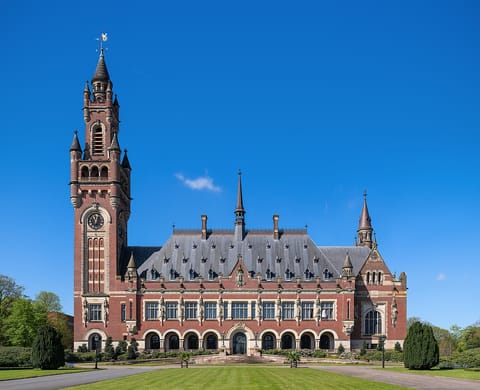
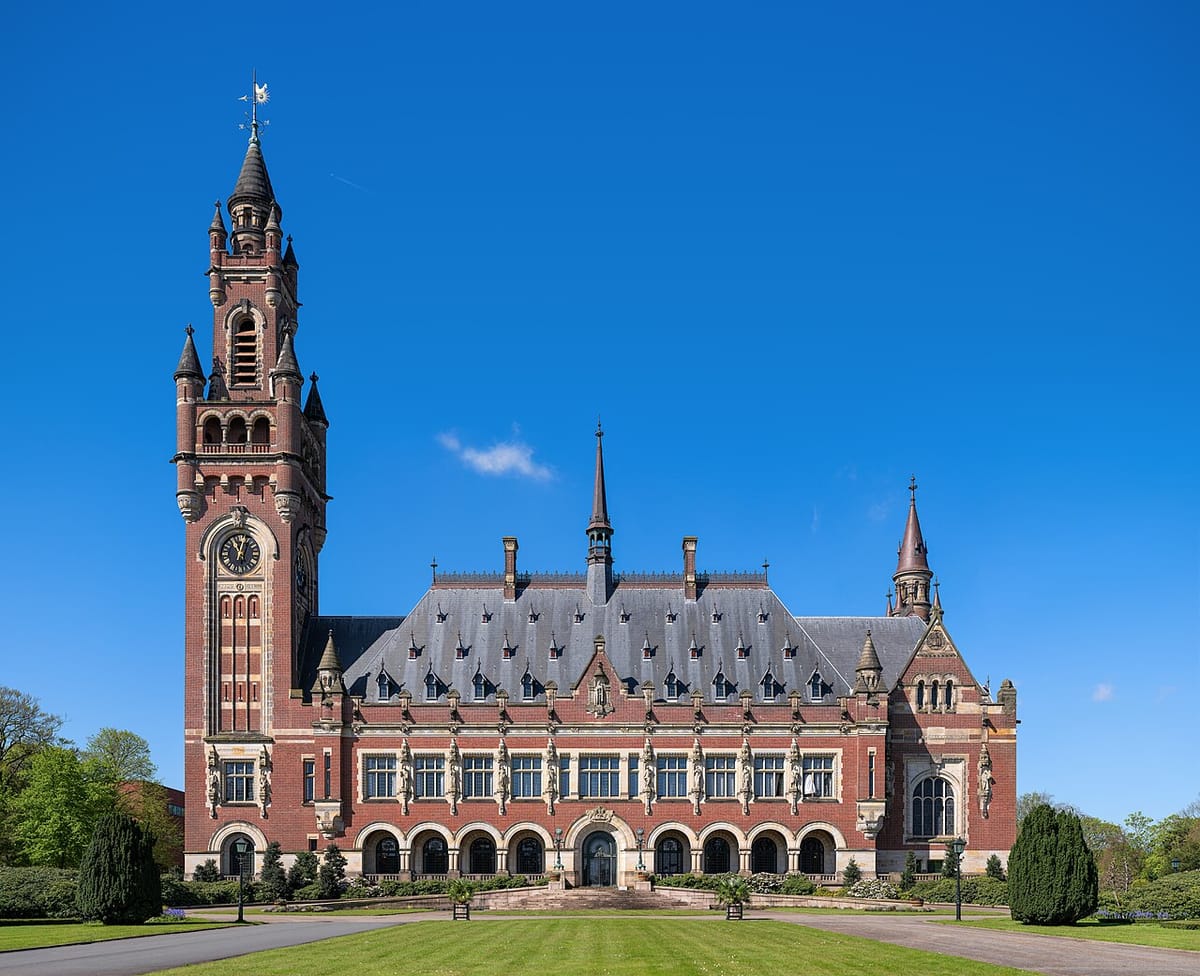
The International Court of Justice (ICJ) is the principal judicial body of the United Nations. It was established in 1945 under the UN Charter and sits in the Peace Palace. Its 15 judges are elected for nine-year terms by the General Assembly and the Security Council voting separately. It is often called the World Court.
The International Criminal Court (ICC) is much younger. It was created by the Rome Statute, adopted in 1998, which took effect in 2002. It is an independent treaty-based institution, not a United Nations organ, although the two cooperate. Its 18 judges are also elected for nine-year terms, by the states that are parties to the Statute.
The shorthand ICJ v ICC can mislead, because the courts are not rivals. They do different jobs and never review each other's decisions.
Who can bring a case
The ICJ: states only
Only states can be parties in the ICJ's contested cases. A government cannot be tried for a crime there, and individuals and companies cannot bring claims. Typical subjects include border and maritime disputes, treaty interpretation, and allegations that a state has breached its obligations under a convention. Recent cases have included claims under the Genocide Convention brought by one state against another.
The ICC: individuals only
The ICC prosecutes people, not states. Its Prosecutor investigates and brings charges, and judges decide whether the evidence is strong enough to go to trial. A suspect is presumed innocent until proven guilty, and the court can impose prison terms on those convicted. Victims may take part in proceedings and can seek reparations.
What each court can decide
The ICJ has two functions. In contentious cases it gives binding judgments on legal disputes between states. It can also order provisional measures, which are urgent interim orders meant to prevent harm while a case is pending. Separately, it issues advisory opinions when asked a legal question by the General Assembly, the Security Council or other authorised UN bodies and agencies. These opinions are not binding, but they carry considerable legal weight. In 2025, for example, the court gave an advisory opinion on states' obligations in relation to climate change.
The ICC's jurisdiction is limited to four categories of crime:
- genocide;
- crimes against humanity;
- war crimes;
- the crime of aggression, where its narrower conditions are met.
It does not hear ordinary crimes such as fraud or murder outside those categories. It is also meant to be a court of last resort. Under the principle of complementarity, it steps in only when national courts are unable or unwilling genuinely to investigate or prosecute.
How jurisdiction is established
Both courts depend on consent, but in different ways. The ICJ can hear a case only if the states involved have accepted its authority. They may do so through a special agreement for one dispute, through a clause in a treaty that sends disputes to the court, or through a declaration accepting its jurisdiction in general terms. A state that has not consented cannot normally be brought before it.
The ICC can act where a crime is committed on the territory of a state party, or by a national of a state party. A state that is not a party can also accept the court's jurisdiction for a particular situation. The UN Security Council can refer a situation to the Prosecutor, which can extend the court's reach to countries that have not joined the Statute.
The differences at a glance
| ICJ | ICC | |
|---|---|---|
| Parties | States | Individuals |
| Founded by | UN Charter, 1945 | Rome Statute, in force 2002 |
| Judges | 15 | 18 |
| Type of ruling | Judgments and advisory opinions | Convictions, acquittals and sentences |
| Subject matter | Any question of international law that states bring | Genocide, crimes against humanity, war crimes, aggression |
Enforcement and limits
Neither court has its own police force. ICJ judgments are final and binding on the parties, with no appeal, but compliance rests largely on the states concerned. If a state fails to comply, the other side may go to the Security Council, where the veto held by permanent members can complicate action.
The ICC relies on states to arrest suspects and hand them over. When a state does not cooperate, warrants can remain unexecuted for years. Some major powers are not parties to the Rome Statute, which limits the court's reach, and some states have withdrawn or threatened to do so.
Other bodies in The Hague
The city hosts other international bodies as well, including the Permanent Court of Arbitration, which administers arbitrations between states and other parties. These are separate from both the ICJ and the ICC, though they are sometimes grouped under the loose label of Hague courts.
Why the distinction matters
When a news report says that a case has been filed at The Hague, the first question is who is on each side. If a state is accused of breaching a treaty, the matter belongs to the International Court of Justice. If a named person is accused of atrocity crimes, it belongs to the International Criminal Court. Keeping that distinction clear makes it easier to follow what a ruling can, and cannot, achieve.