

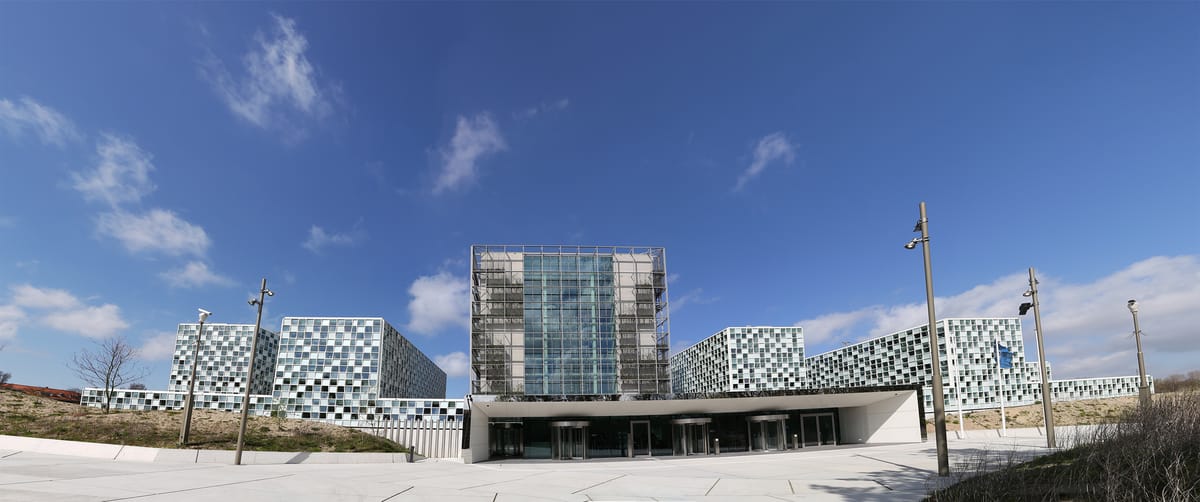
ICC reparations: how victims of war crimes can seek redress
The International Criminal Court (ICC) in The Hague is best known for prosecuting individuals accused of genocide, crimes against humanity and war crimes. Its founding treaty also gives war crimes victims a route to redress. Judges can order convicted people to repair the harm they caused, and a separate body, the Trust Fund for Victims, helps turn those orders into practical help. This article explains how ICC reparations work and where they fall short.
The legal basis for reparations
The Rome Statute, which created the court, sets out the framework. Article 75 requires the court to establish principles on reparations, including restitution, compensation and rehabilitation. It allows judges to make an order directly against a convicted person. Article 79 created the Trust Fund for Victims, and Article 68 lets victims present their views and concerns during proceedings.
Reparations at the ICC are a feature of international justice that differs from many national systems. They are not a separate civil claim. They follow a conviction, and they are tied to the crimes for which a person has been found guilty.
Who can apply
Victims are generally people who suffered harm as a result of a crime within the court's jurisdiction. That can include direct victims, family members and, in some cases, organisations or communities, for example where schools, hospitals or places of worship were attacked. The harm may be physical, psychological or material.
Eligibility is limited to the crimes, places and dates covered by the conviction. In the case of Dominic Ongwen, for instance, the court confined reparations to victims of crimes he committed in northern Uganda between 1 July 2002 and 31 December 2005.
How an application is made
Applications are usually made on a standard form and submitted through the court's Registry, which has a section dedicated to victim participation and reparations. Victims can apply with help from the court's outreach staff, legal representatives or local civil society organisations. Requests can be filed before a conviction, but judges only decide on them if the accused is convicted.
In large cases, judges often rely on the Registry and the Trust Fund to identify and assess likely beneficiaries rather than deciding thousands of individual claims themselves.
What the court can order
A reparations order is made by the trial chamber. It sets out who is eligible, what harm is recognised, the types of reparation and the extent of the convicted person's liability. Awards may be individual or collective, and they may be symbolic. Typical measures include:
- financial compensation or support for individuals;
- medical and psychological rehabilitation;
- community projects, such as rebuilding or livelihood support;
- symbolic measures, including memorials and public acknowledgement.
The convicted person or the victims can challenge an order. In April 2025 the Appeals Chamber rejected Ongwen's appeal against the reparations order in his case, which made the order final.
The role of the Trust Fund for Victims
The Trust Fund for Victims has two functions. It can implement reparations ordered by the court, and it can run assistance programmes for victims and their families in situations the court is dealing with, whether or not a conviction has been reached.
Its importance comes from a practical problem. Many convicted people have no known assets, and judges find them indigent for the purposes of reparations. The order still names the convicted person as liable, but the Trust Fund may be asked to complement the award from its voluntary resources and to raise additional money. Its board decides whether and how far to do so. Those resources come from donations by states, institutions and individuals, and the Fund has set an annual funding target of at least €10 million.
Cases that show the process
The Al Mahdi case concerned the destruction of historic mausoleums in Timbuktu, Mali. The court sentenced him to nine years and ordered €2.7 million in reparations. The Trust Fund reported in July 2026 that it had fully implemented the programme as of 31 March 2026, with community measures reaching more than 70,000 people.
The Ongwen order, issued on 28 February 2024, was the largest in the court's history. Judges estimated the cost of the reparations at €52.4 million, with about 50,000 victims expected to benefit. On 28 April 2026, Trial Chamber X issued a reparations order in the Al Hassan case, relating to crimes in Timbuktu. It awarded collective community-based reparations, with a limited individual component, to an estimated 65,202 victims. The Trust Fund must submit a draft implementation plan by 25 January 2027.
Other cases are at earlier stages. The court held reparations hearings in September 2026 in the Abd-Al-Rahman case, which concerns Darfur, and on 1 October 2026 in the Yekatom and Ngaïssona case, which concerns the Central African Republic. In each, the chamber is expected to rule in due course.
Limits and challenges
A reparations order is not a payment. Orders can take years to issue and longer to implement, and the amounts ordered can far exceed what is available. Victims may wait a long time between the conviction and any benefit. Security risks, damaged infrastructure and the difficulty of finding eligible people all slow delivery. Reparations are also unavailable where there is no conviction, which excludes many victims of crimes that never reach trial.
What this means for victims
Victims seeking redress through the ICC need to know that the process is slow and depends on prosecutions succeeding. Those who think they may be eligible can contact the court's Registry or organisations working with victims in their region. The Trust Fund's assistance programmes may offer support even where no reparations order exists. The system is limited, but it recognises victims as participants in international justice rather than only as witnesses.