

Louis Taylor: the Pioneer Hotel fire conviction and 2013 release
Louis Cuen Taylor was 16 when he was arrested after the Pioneer Hotel fire in Tucson, Arizona, on 20 December 1970. A jury convicted him in 1972 of 28 counts of murder, and he served 42 years in prison before his release on 2 April 2013. He was freed under a deal with prosecutors in which he pleaded no contest. He has always said he is innocent, and his legal challenges have continued for more than a decade.
The fire at the Pioneer Hotel
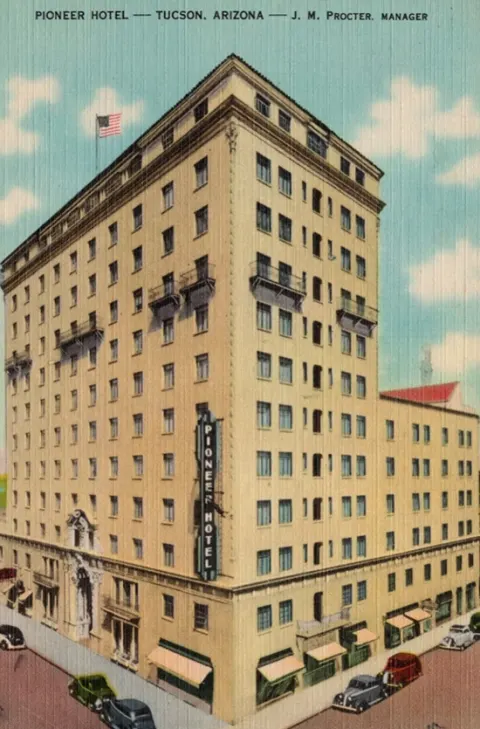
The Pioneer Hotel was an 11-storey building on North Stone Avenue in downtown Tucson. It was designed by the local architect Roy Place and opened in 1929. Shortly after midnight on 20 December 1970, fire spread through the building while guests were staying there and a Christmas party for employees of an aircraft company was under way. In total, 29 people died, making it the deadliest fire in Arizona's history.
Taylor was in the hotel that night. He has said he went there to get free drinks at the party. Accounts from the time say he knocked on doors to warn guests, helped hotel staff and emergency workers, and assisted injured people. Police arrested him that night.
Arrest, trial and sentence
Taylor was known to local police because of earlier juvenile offences. The courts had to decide whether he should be tried as a juvenile or as an adult, and he was tried as an adult. At his trial in 1972 he testified and denied starting the fire. The jury, which was all white, returned its verdict on 21 March 1972. Taylor is of mixed Black and Hispanic heritage, and the trial took place at a time of racial tension in Tucson.
He was sentenced to 28 consecutive life sentences. The charges covered 28 of the 29 deaths. The 29th person died some months later, and Taylor was never charged over that death.
Questions about the evidence
The prosecution case rested on the conclusion that the fire had been set deliberately. An investigator told the jury that an accelerant, meaning a substance used to spread a fire, had been used. Laboratory tests did not support that claim, and Taylor's trial lawyers did not know about the test results. Another investigator presented a profile of the likely arsonist, suggesting a young Black man.
Over the years, advances in fire science led experts to doubt the methods used in 1970. A 60 Minutes report and the work of the Arizona Justice Project, a Phoenix-based non-profit group that helps people it believes were wrongly convicted, brought the case back to public attention. In 2012 Taylor's supporters presented new evidence that they said showed the fire may not have been arson at all. The Pima County Attorney's Office disputed that claim. At the county attorney's request, the Tucson Fire Department re-examined the case. It concluded that the cause of the fire could not be determined from the evidence still available.
The 2013 no contest plea and release
Taylor's lawyers had asked for a new trial. Many key witnesses had died and important evidence had been destroyed, and a retrial could have taken more than a year while he stayed in prison. The prosecution offered a deal instead. His original convictions would be set aside and he would be sentenced to time served, but only if he pleaded no contest to the original charges.
A no contest plea means a defendant does not dispute the charges but does not admit guilt either. On 2 April 2013, at the age of 58, Taylor appeared before Judge Richard Fields and answered "no contest" to each of the 28 counts. He was released that day. He told reporters that he had been left with no real choice and that he was innocent.
Life after release
Taylor found it hard to adjust to life outside prison after spending most of his life inside. In July 2017 Tucson police arrested him over an armed robbery at the Riverpark Inn, where a hotel clerk was threatened with a baseball bat. He was charged with armed robbery, kidnapping and aggravated assault. In December 2017 he pleaded guilty to one amended count of attempted armed robbery under a plea agreement. He later received a three-year prison sentence for that offence. His lawyers said at the time that he had struggled since leaving prison.
Civil claims and later proceedings
Taylor brought civil rights claims against the City of Tucson, Pima County and the state over his prosecution. These claims have run into the effect of his no contest plea. A federal appeals court ruled that he could not collect damages for his years in prison, and one judge dissented sharply from that ruling. In 2020 the United States Supreme Court declined to hear his appeal.
The legal fight did not end there. In November 2025 the Pima County Superior Court refused his petition for post-conviction relief. It found that the claims, including witness recantations, did not meet the standard for a new trial. It also found that his plea prevented him from challenging the finding that the fire was arson. His lawyers said they would seek compensation under a new Arizona law for people wrongly convicted. They argued that success under that law could help his continuing federal civil rights case.
What the case shows
The Taylor case shows how a plea can resolve a criminal case without settling the question of guilt. His convictions were set aside, yet the no contest plea still limits what he can later argue in court. Prosecutors have never accepted that he was innocent, and he has never accepted that he was guilty. It also shows how changes in forensic science can lead courts and prosecutors to look again at decisions made decades earlier. The cause of the fire that killed 29 people has never been established.