
Israel Madera-Flores: the 1982 Waterbury fire and life sentence
Israel Madera-Flores, also recorded in court papers as Israel Madera and Israel Flores, was sentenced in Waterbury Superior Court on 14 October 1983 to life imprisonment without parole. He had been convicted of 14 counts of arson murder over a fire on 5 July 1982 that killed 14 people, seven of them children. The blaze is widely described as the deadliest in the history of Waterbury, Connecticut. The date is sometimes misquoted as 15 July, but court and press records place the fire on 5 July.
The fire of 5 July 1982
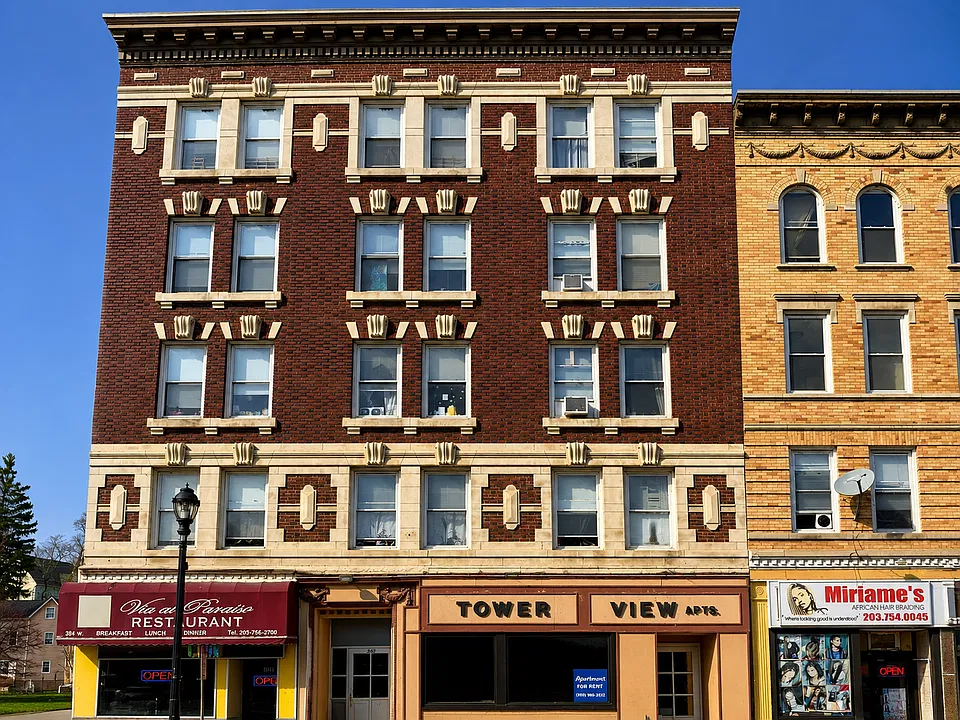
The fire broke out in a five-storey apartment building at 47 Prospect Street. Most tenants spoke only Spanish, and many were away for the Independence Day holiday. That made it hard for officials to establish who had been inside. It took investigators nearly two weeks to find and identify the 14 victims. Among the dead were eight members of a single family.
Reports at the time gave different figures for the people made homeless, from nearly 100 to 123. The building was old. It had no smoke detectors, sprinklers or alarm system, and no elevator. Residents had also blocked back doors to guard against burglary, which complicated escape.
Arrest and charges
Police arrested Madera-Flores at the scene, and he was arraigned within days. A contemporary press report said he had been visiting his niece, who lived in the building. He told police he set the fire in anger at his 15-year-old niece for throwing him out of her apartment because he was drunk. The niece survived.
The charge was arson murder. In plain terms, this is a form of murder in which a person sets a fire and a death results. Prosecutors do not have to prove an intention to kill a particular person. That is why the law allowed 14 separate murder counts to be brought from a single fire.
Pre-trial hearings and the defendant's background
The defence raised two main challenges before the case was resolved. His lawyer tried unsuccessfully to have the confession to Waterbury police suppressed as evidence. The defence also sought dismissal of the charges, arguing that the arson murder law was unconstitutional. Both motions were refused.
Medical evidence was heard at pre-trial hearings. Doctors and psychiatrists who examined him described an epileptic with a history of mental illness and alcoholism. He was a native of Puerto Rico who spoke little English, could not read or write, and had only a third-grade education. These facts bore on the legal arguments about his confession. The reports available are not consistent on how the case concluded in court. A wire report from the time refers to a plea of no contest, while the later appeal ruling describes a jury finding of guilt on 14 counts. Either way, the outcome was a conviction on all 14 counts.
The sentence
At sentencing on 14 October 1983, Judge Robert D. Glass imposed the maximum penalty available. He ordered two consecutive life sentences without parole. The writer's notes record the sentence as life imprisonment without parole. Some summaries instead give it as 120 years without parole. Whichever way it is expressed, the effect was the same: he was never to be released.
What life without parole means
Parole is the early release of a prisoner under supervision. A sentence of life without parole removes that possibility entirely, so the prisoner is expected to die in custody unless the conviction is overturned or the sentence is later changed by a court or by clemency. Connecticut did not at that time have the death penalty in operation for this kind of case, so life without parole was the most severe outcome in practice.
The appeal
His defence lawyer said after the sentencing that he would challenge the state's arson murder law in the Connecticut Supreme Court. He also asked that court to review the lower court's rulings on the two motions. The Supreme Court issued its decision, reported as State v. Madera, on 14 February 1989. The convictions were not disturbed in any way that led to his release. He remained in prison until he died in December 2006, at the age of 54.
Fire safety after Prospect Street
Waterbury officials later said that lessons had been learned. Reports on the 30th anniversary said the city had since strengthened its fire rules and stepped up enforcement, with some changes made locally and others through state law. The absence of basic protections in the building, such as detectors and sprinklers, has since featured in discussion of the fire alongside the criminal case.
Why the case is still cited
The case is cited for several reasons. It involved one of the largest single-incident death tolls from arson in Connecticut. It tested the state's arson murder statute and the rules on confessions from defendants with limited education and little English. It also shows how a court can reach the same practical result, imprisonment for life, through consecutive sentences on multiple counts.
For the families of the 14 people who died, the court outcome could not undo the loss. Public memory of the fire has stayed tied to the victims, many of them children and members of one household. Waterbury's account of the event is a reminder that the damage went beyond a single act: a building without modern safeguards, a community that was largely Spanish-speaking, and a justice system that had to work through language and mental-health questions before reaching a final sentence.