
Harry Belcher: 1965 Ferndale fire, life sentence upheld on appeal
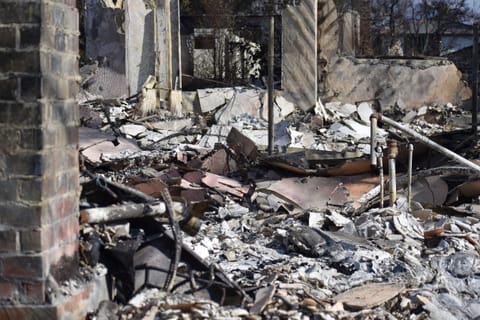
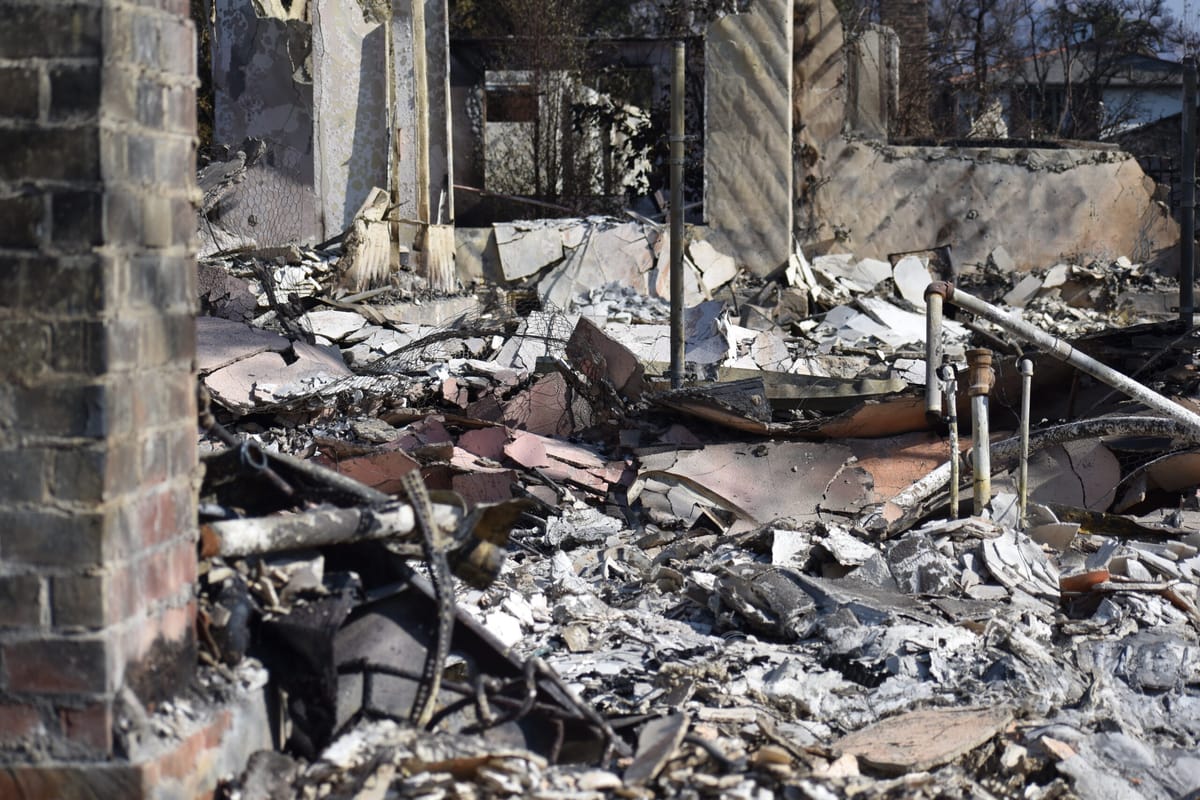
On 25 January 1965 a fire destroyed a family home on Hazelhurst in Ferndale, Michigan, and seven members of one household died. The householder, Harry M. Belcher, then aged 32, survived. He was later charged with and convicted by a jury of murder in the perpetration of arson, and he was sentenced to life imprisonment. On 18 January 1971 the Michigan Court of Appeals affirmed the conviction, and further leave to appeal was refused on 23 March 1971.
The fire of 25 January 1965
The fire broke out in the early hours of the morning, shortly before 6 a.m., at the home Mr Belcher shared with his wife and six children. Mr Belcher escaped with smoke inhalation. The other seven occupants, his wife and their children, died from asphyxiation caused by smoke. All of the victims were his relatives.
A neighbour was woken by cries for help. When he asked where the caller was, the man identified himself as Belcher and gave the address of the house. The neighbour telephoned the fire department and ran towards the property. Firefighters took charge shortly afterwards.
The investigation and the evidence at trial
The case was investigated by the Ferndale police and fire departments, together with the Michigan State Police. Mr Belcher was arrested and charged after that inquiry. The appeal court's account of the trial shows that the prosecution case rested on circumstantial evidence, meaning evidence from which a jury is asked to draw conclusions rather than direct eyewitness proof.
According to the appeal judgment, the jury heard evidence on these points:
- The fire began on the landing of a stairway leading to the basement.
- A fast-burning accelerant had been used, and chemical testing showed it to be gasoline.
- Experts said the gas appliances and heating units in the house could not have started the blaze. They also said a spark from the burners would have caused an explosion, and nothing indicated one had occurred.
- Garbage at the point of origin was saturated with gasoline, and a plastic container held traces of it. A gas can was found in the defendant's basement workshop.
- The bodies of the victims were all found in one upstairs bedroom. This differed from the defendant's own account of where his wife and children slept.
- A ladder, which the defendant told the neighbour to fetch for his escape, had been placed there by the defendant only a few days before the fire.
- Evidence about tampered telephone wires and an open kitchen door was also considered.
The defence position was that the fire was accidental and that the placing of the ladder was coincidence.
The charge: murder in the perpetration of arson
Mr Belcher was convicted under section 750.316 of the Michigan Compiled Laws. This is a form of what is often called felony murder. In plain English, a death caused while the defendant is committing a listed serious crime, here arson (deliberately setting a fire), is treated as murder. The prosecution did not have to prove a separate plan to kill each victim. It had to prove that the fire was deliberately set and that death resulted from it.
That is why the dispute at trial centred on whether the fire was an accident or was set on purpose. If the jury accepted that it was deliberately started, the deaths followed from the arson. The jury returned a guilty verdict, and the trial court imposed a sentence of life imprisonment.
The 1971 appeal
Mr Belcher appealed after the Court of Appeals granted leave on 14 February 1969. The appeal was heard by a panel of Judges Gillis, Danhof and O'Hara, with Judge Gillis delivering the opinion. The defence warned against convicting by piling one inference upon another. The court did not accept that this meant circumstantial evidence could rarely support a conviction. It held that the jury was fully entitled to find that the fire was not accidental, given the gasoline found, the burn pattern, and the distance of any equipment that might have caused a stray spark.
The court's decision was a single word: affirmed. Judgment was dated 18 January 1971, leave to appeal further was denied on 23 March 1971, and the opinion was released for publication on 9 April 1971. The decision is reported as People v Belcher, 29 Mich App 341, 185 NW2d 440.
Sentence and aftermath
Mr Belcher remained subject to the life sentence. Public records indicate he died in 1998, and a memorial entry says he was buried near his wife and children. The case is catalogued among American family killings in which a parent is the perpetrator and seven people died.
Reading the court record
The most reliable account of the case is the published appeal opinion, which sets out the evidence heard at trial and the legal reasoning. Readers wanting more detail can consult the trial transcript and court file held by the relevant Michigan court, as well as contemporary local newspaper reports. This article reports only what is set out in those court findings. Mr Belcher's conviction was tested on appeal and upheld, so the verdict and the sentence stand as the court's final word on the case.