
Criminal justice in Britain in September 1878
Mid-September 1878 falls in a period of change for British criminal justice. Records for that date are thin and tied to no single famous case, so this article describes the system a defendant would have met then. It covers how trials ran, what the law allowed, how punishments were set and how mistakes could be put right.
The courts: from magistrate to Old Bailey
Almost every case began before a magistrate. Minor offences were decided there and then. For serious charges, the magistrate heard the prosecution evidence and decided whether to send the accused for trial by jury. In London that usually meant the Central Criminal Court, better known as the Old Bailey. Elsewhere it meant the assizes, which were visiting courts held by judges on circuit, or the quarter sessions.
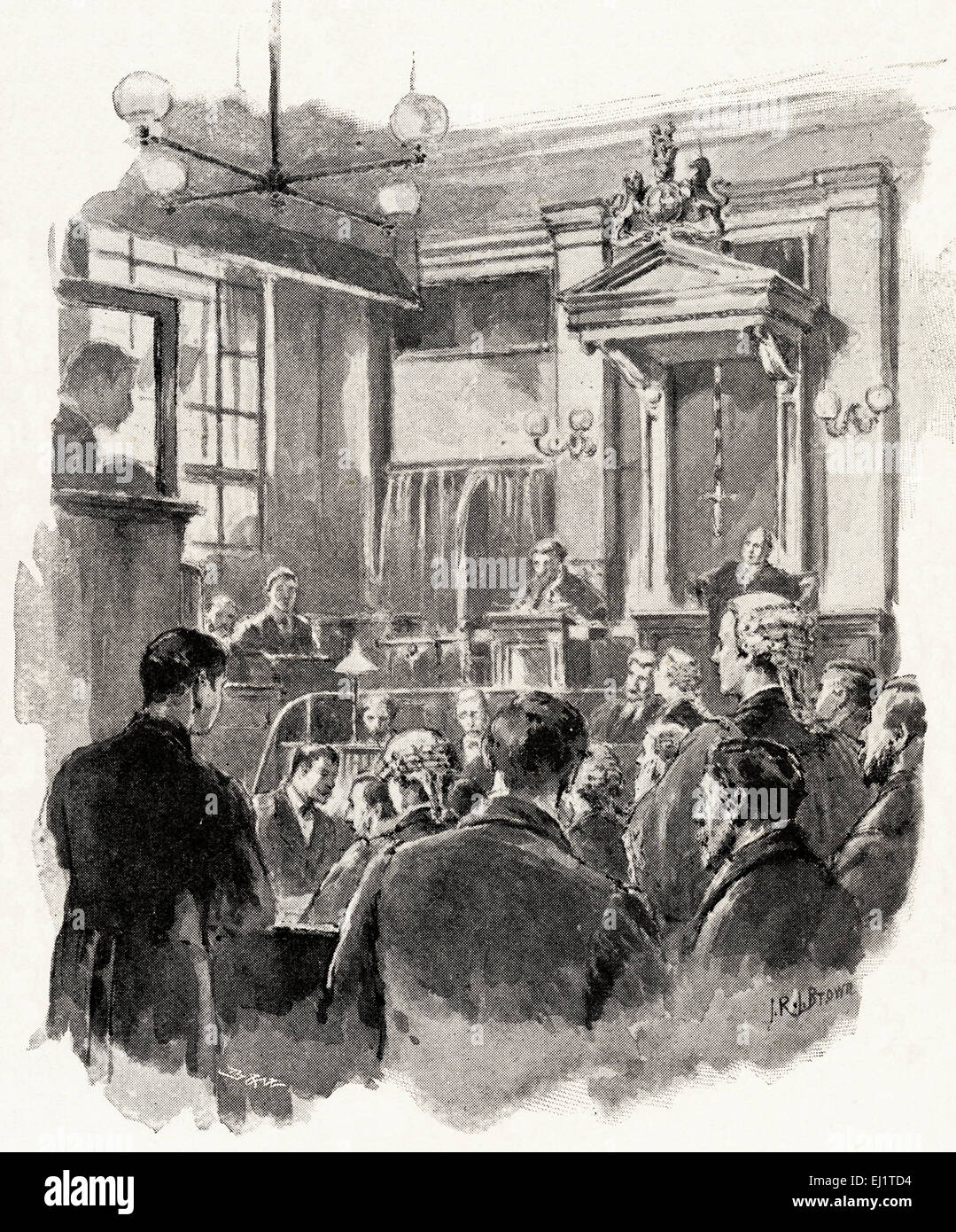
The Old Bailey sat in sessions roughly every month. Its proceedings were printed and sold, and they survive as a rich public record. The account of one murder trial there, concluded on 16 September 1878, records a guilty verdict. The defence had called relatives to speak about mental illness in the defendant's family. That case shows how closely mental state was examined in homicide trials, under rules that had been settled since the 1840s.
Who prosecuted, and who investigated
In 1878 there was no national prosecution service. Many cases were brought by the victim or by the police acting for them, and the Crown stepped in mainly in the gravest matters. The office of Director of Public Prosecutions came only the following year, under the Prosecution of Offences Act 1879.
Detective work was also being reorganised. The Criminal Investigation Department was set up at Scotland Yard in the spring of 1878. It followed a scandal in which senior detectives had been tried over corruption, and it brought plain-clothes officers under a single command for the first time. Its first head was Howard Vincent.
What happened at trial
Counsel and the accused
Since 1836 defence barristers had been allowed to address the jury in felony cases, so trials were more of a contest than they had been. The accused person, however, still could not give sworn evidence. That rule lasted until the Criminal Evidence Act 1898. A defendant could make an unsworn statement from the dock, but could not be cross-examined on it and could not be sworn as a witness.
The jury
Verdicts were returned by twelve men, as women could not sit on juries until the twentieth century. The jury could find a defendant guilty of a lesser offence than the one charged. A common example was manslaughter in place of murder. Juries could also add a recommendation to mercy, which the judge and the Home Office would then weigh.
Punishment in 1878
A conviction for murder carried a mandatory sentence of death. Public hangings had ended in 1868, and executions now took place inside prison walls. For other serious crimes the usual sentence was penal servitude, which had replaced transportation to Australia. Shorter terms of imprisonment, often with hard labour, and fines made up much of the rest.
Prisons were also changing. Under the Prison Act 1877, local gaols that had been run by county and borough authorities passed to central government control on 1 April 1878. The aim was a more uniform regime across the country.
Review and appeal
There was no general right of appeal in criminal cases. The Court of Criminal Appeal did not exist until 1907. A judge could reserve a point of law for the Court for Crown Cases Reserved, which was a panel of judges, but this reached only a small number of cases.
The practical safeguard in a capital case was the Home Secretary, then Richard Assheton Cross. He advised on the royal prerogative of mercy and could recommend that a death sentence be commuted. The 1877 Penge case showed how this could work. After four people were convicted of murder at the Old Bailey, a public campaign grew against the verdict and the Home Secretary reviewed the case. It is a good example of how, in this period, the main route to correcting a doubtful conviction was political and administrative rather than judicial.
Why the details matter
Many features of modern courts were missing in 1878. There was no right of appeal on the facts, the defendant could not testify on oath and there was no prosecution service. Other features will look familiar, including the jury, the presumption that a defendant is innocent until proved guilty and the principle that a person should have a fair trial in open court. Seen against this background, much of the twentieth-century reform of criminal procedure can be read as an attempt to add review and consistency to a system that relied heavily on the judgement of individual judges, juries and ministers.
Reading the records today
Researchers can still study courtroom practice from this period through printed trial reports, prison registers and newspaper coverage. These sources have limits. Reports were often shortened, and they say little about how juries reached their decisions. Used with care, they give a reliable picture of what was said in open court and what the outcome was. They also remind modern readers how recently some basic protections arrived.