
Inter-American Court: from petition to binding judgment
A person who says their rights were violated by a government in the Americas cannot simply file a claim at the Inter-American Court of Human Rights. The route is longer and passes through a separate body first. This article follows a case from the first complaint to the final judgment and the monitoring that comes after it.
What the court is and where it sits
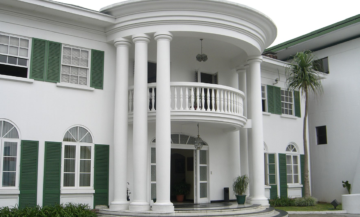
The Inter-American Court of Human Rights is the judicial organ of the Inter-American system, which operates under the Organization of American States. It has its seat in San José, Costa Rica, and began work in 1979. Seven judges sit on it. They serve in a personal capacity, are elected through the OAS General Assembly for six years and can be re-elected once. The court applies mainly the American Convention on Human Rights.
Among regional human rights courts, it is one of three alongside those in Europe and Africa. Its rulings are aimed at states, not individuals. The question in every case is state responsibility: whether a government, through its officials, courts or failure to act, breached its obligations under the treaty.
Who can bring a case
Only the Inter-American Commission on Human Rights or a state party can refer a case to the court. Individuals have no direct access. They must first lodge a petition with the Commission, which is based in Washington DC.
The court can only act against states that have accepted its contentious jurisdiction. Twenty states have done so, among them Argentina, Brazil, Chile, Colombia, Mexico and Peru. Some countries have ratified the Convention but have not accepted the court's authority, and others have left the system. Trinidad and Tobago and Venezuela both withdrew by denouncing the Convention.
The Commission stage
The Commission first decides whether a petition is admissible. As a rule, the person must have tried the remedies available in their own country, and the complaint must be filed within the time limit. If it is admissible, the Commission examines the facts, invites both sides to respond and may try to broker a friendly settlement. If it finds a violation, it issues a report with recommendations. Where the state has accepted the court's jurisdiction and does not comply, the Commission may refer the case to the court.
The written phase
Once a case is filed, the court notifies the state and the alleged victims or their representatives. The victims' side submits its own pleading, setting out claims and the reparations it seeks. This is a notable feature of the system: the victims take part as parties, not only as witnesses.
The state then answers, accepting or contesting the facts. It may also raise preliminary objections, which are procedural arguments that the court should not decide the case at all, for example because domestic remedies were not exhausted. The court usually deals with these objections in the same judgment as the merits.
The public hearing
Most cases reach an oral hearing, held in public and often broadcast online. The judges set out who will testify. Alleged victims, witnesses and experts may give evidence, though much of it is submitted in written, sworn statements to save time. The Commission, the representatives and the state each argue their position, and the judges put questions directly to the participants.
The court can sit away from San José, and it has held sessions in other member states. Organisations and academics may file amicus curiae briefs, which are written opinions from outsiders offering legal context. They do not become parties to the case.
Judgment and reparations
The court gives its decision in a reasoned judgment, which may be accompanied by separate opinions from individual judges. It normally decides the facts, whether the Convention was breached and what the state must do about it. Reparations are a central part of the ruling and can go well beyond money. Orders have included:
- compensation for material and moral harm;
- a genuine investigation and prosecution of those responsible;
- a public acknowledgement of responsibility or apology;
- medical care, education or other support for victims and relatives;
- changes to laws or practices so that the violation is not repeated.
A judgment is final and cannot be appealed. A party may ask the court to clarify its meaning, but the request must be made within 90 days. The Convention states that countries must comply with decisions in cases to which they are parties.
Urgent orders and supervision
Alongside full cases, the court can order provisional measures in situations of extreme gravity and urgency, where irreparable harm to people is a risk. These have been used, for instance, to protect witnesses, detainees and human rights defenders while a case is pending.
A ruling does not end the matter. The court monitors compliance, asking states for reports and holding supervision hearings. Some measures, such as paying compensation, are carried out quickly, while investigations and legal reforms can take years.
Why the process matters
The court's first contentious case, Velásquez Rodríguez v. Honduras, concerned an enforced disappearance. It helped establish that states must prevent, investigate and punish serious abuses. Since then, the court has handled human rights cases on topics ranging from indigenous land to freedom of expression, fair trial guarantees and the environment.
Its weakness is enforcement, because the court depends on states to implement its orders. Its strength is that the rulings are public, reasoned and binding, and that victims can take part in the process from start to finish.