
European Court of Human Rights: how a case reaches Strasbourg
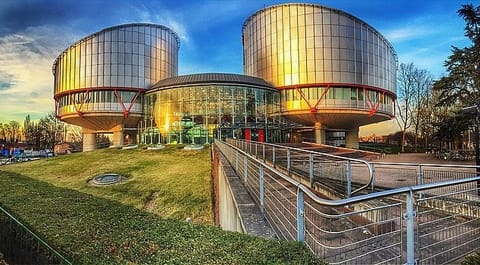
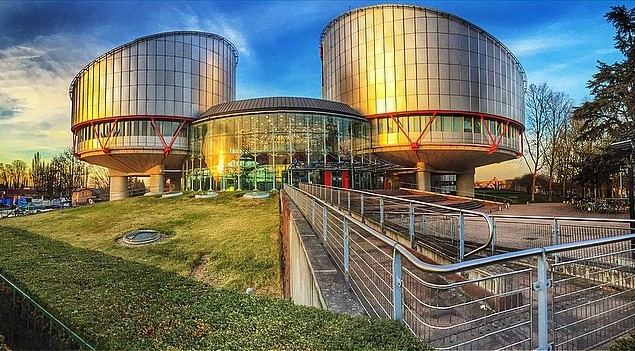
The European Court of Human Rights sits in Strasbourg, France. It is one of the best-known international courts. It does not act as a further appeal court that re-tries criminal or civil cases. It asks a narrower question: did a state breach the rights set out in the European Convention on Human Rights? This article explains how a human rights case gets from a national courtroom to the Strasbourg court.
What the court is and who can bring a case
The court was set up under the Convention, a treaty drawn up within the Council of Europe. It hears complaints against the states that have signed up to the treaty. The Council of Europe is a separate body from the European Union, and the Strasbourg court should not be confused with the EU's Court of Justice in Luxembourg.
There are two main types of case. In an individual application, a person, company or non-governmental organisation says a state has violated their rights. In an inter-state case, one government complains about another. Individual applications make up the great majority of the court's work. The applicant must say they are a victim of the alleged violation, and the complaint must be about a state that is bound by the Convention.
Step one: use up the national system
The court is meant to be a last resort. Applicants must normally go through the courts of their own country first, up to the highest body that can give them an effective remedy. This is known as exhausting domestic remedies. The idea is that national authorities should have the first chance to put matters right.
The rights complaint must also have been raised, at least in substance, before the national courts. An applicant who never mentioned the issue at home will usually find the door closed in Strasbourg.
Step two: apply in time
There is a strict time limit. For final domestic decisions taken since 1 February 2022, an application must be lodged within four months. Before that change the limit was six months. The clock generally starts when the final national decision is delivered or served. Missing the deadline is one of the most common reasons applications fail.
Step three: the application itself
Applying costs nothing, and a lawyer is not required at the start. The applicant must complete the court's official form, set out the facts, name the Convention articles said to have been breached and attach the relevant national decisions. Incomplete applications may not be registered at all. Once a lawyer is needed, for example after the government has been asked to respond, legal aid may be available in some circumstances.
In rare cases of urgent risk, such as a threatened deportation to a country where the person says they would face serious harm, the court can issue an interim measure asking a state to hold off while it examines the case.
Admissibility: the main filter
Before the court looks at the merits, it decides on admissibility. Most applications never get further. The main tests include:
- domestic remedies have been exhausted and the time limit has been met;
- the complaint is not anonymous and is not essentially the same as one already examined;
- the complaint falls within the Convention and concerns a state bound by it;
- the complaint is not manifestly ill-founded, meaning it shows no arguable breach on its face;
- the applicant has not suffered no significant disadvantage, unless respect for human rights requires an examination anyway.
Many applications are screened by a single judge, who can declare them inadmissible. Such decisions are final and are not usually accompanied by detailed reasons. More straightforward cases go to a committee of three judges. Cases raising new or serious questions go to a Chamber of seven judges.
The merits stage
If a case is communicated to the respondent state, the government is asked to reply, and the applicant can respond. The court may seek written submissions, and sometimes holds a public hearing. Third parties, such as other governments or rights organisations, may be allowed to intervene in important cases.
A Chamber then delivers a judgment saying whether there has been a violation. Where it finds one, it can award just satisfaction, usually a sum of money for damage and legal costs. It cannot overturn a national court's decision directly.
The Grand Chamber
A small number of cases reach the Grand Chamber of 17 judges, either because a Chamber hands over a case raising serious questions, or because a party asks for a referral within three months of a Chamber judgment. A panel of five judges decides whether to accept such a request, and most are refused. Where a referral is refused, the Chamber judgment becomes final.
After the judgment
Judgments are binding on the state concerned. The Committee of Ministers of the Council of Europe supervises how they are carried out. That can mean paying compensation, reopening a case, changing a practice or amending legislation. Where many similar complaints arise from the same systemic problem, the court may issue a pilot judgment asking the state to fix the underlying cause.
Why the process matters
The route to Strasbourg is long, and the court receives far more applications than it can hear in full. The filters are designed to keep its attention on cases where the Convention is genuinely at stake. For people who have exhausted every option at home, it remains one of the few international courts where an individual can bring a human rights case directly against a state.