
What the International Court of Justice does and how it differs from the ICC
The words "international court" are often used as though they describe a single institution. In fact, two separate courts sit in The Hague, and they do very different work. The International Court of Justice (ICJ) hears legal disputes between governments. The International Criminal Court (ICC) puts individuals on trial. Knowing which is which helps in following news about cross-border cases, from treaty quarrels to arrest warrants.
What the International Court of Justice is
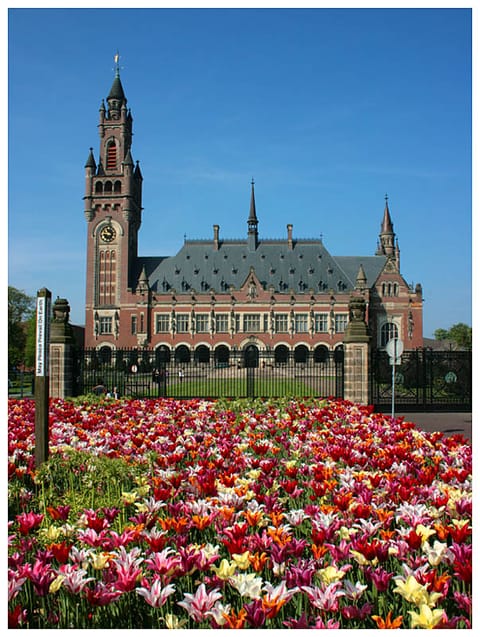
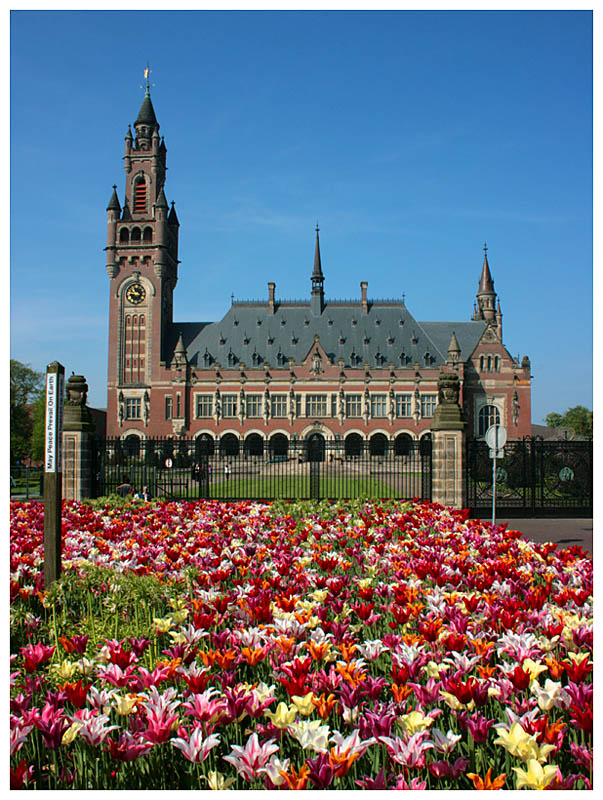
The ICJ is the principal judicial organ of the United Nations. It was created by the UN Charter in 1945 and began work in 1946, succeeding the Permanent Court of International Justice, which had been attached to the League of Nations. Its seat is the Peace Palace in The Hague, and its official languages are English and French. It marked its 80th anniversary in April 2026.
The court has 15 judges. They are elected by both the UN General Assembly and the Security Council, and each serves a nine-year term that can be renewed. One third of the bench is renewed every three years, which keeps continuity while allowing change. No two judges may be nationals of the same country. Since March 2025 the President has been Judge Iwasawa Yuji of Japan, and elections for five seats are due in November 2026.
The two kinds of work the ICJ does
Contentious cases
In a contentious case, one state brings a claim against another. Typical subjects include land and maritime boundaries, treaty interpretation, the use of force, and alleged breaches of conventions such as the Genocide Convention. Only states can be parties. Individuals, companies and non-governmental groups cannot bring cases to the court.
The ICJ cannot hear a dispute simply because one country complains. Jurisdiction rests on consent. A state may give it in a specific agreement with another state, by accepting a clause in a treaty that sends disputes to the court, or by making a declaration accepting the court's authority in general. Respondent states often challenge jurisdiction first, so many cases begin with a separate ruling on whether the court can proceed.
Judgments in contentious cases are binding on the parties and final, with no appeal. The court has no police force, however. If a state does not comply, the other side may take the matter to the UN Security Council, where the veto held by five permanent members can complicate any response.
Advisory opinions
The second function is giving advisory opinions. Certain UN bodies and specialised agencies can ask the court for its view on a legal question. These opinions are not binding in the way a judgment is, but they carry real weight in shaping how international law is understood. In July 2025, for example, the court gave an opinion on the obligations of states in relation to climate change.
What the ICC is
The ICC is a different kind of body. It was established by the Rome Statute, which took effect in 2002, and it is not part of the United Nations. It is a permanent court that tries individuals accused of genocide, crimes against humanity, war crimes and the crime of aggression. Its work is led by an independent Office of the Prosecutor, and its judges decide whether charges are confirmed and whether a defendant is guilty. Defendants are presumed innocent until proved guilty.
The ICC acts as a court of last resort. It steps in only when a country is unable or unwilling to investigate and prosecute such crimes genuinely. Its authority generally depends on a state having joined the Rome Statute, on a crime taking place on the territory of a member state, or on a referral by the Security Council. Like the ICJ, it has no police force of its own and relies on states to arrest suspects and hand them over.
The main differences at a glance
| Feature | ICJ | ICC |
|---|---|---|
| Who appears | States | Individuals |
| Type of case | Disputes between states and legal questions | Criminal trials |
| Founded by | UN Charter | Rome Statute |
| Link to the UN | Principal judicial organ | Independent institution |
| Outcome | Binding judgment or advisory opinion | Conviction and sentence, or acquittal |
A simple way to remember the split is that the ICJ asks whether a state has broken its obligations, while the ICC asks whether a person committed a crime. One situation can involve both courts. A conflict might lead to a case between two governments at the ICJ and, separately, to criminal proceedings against named individuals at the ICC. The two cases answer different questions and do not depend on each other.
Where extradition and cross-border cases fit in
Neither court processes extradition requests. Those are handled by national courts and governments under treaties and domestic law. The ICJ can nonetheless become involved when states disagree about their duties. In a case between Belgium and Senegal, the court considered whether Senegal had to prosecute a former head of state or extradite him. The court has also ruled on disputes about whether foreign nationals facing criminal charges were given access to consular help, as international treaties require.
Why the distinction matters
Confusing the two courts can lead to misunderstandings about what a ruling means. An ICJ judgment does not convict anyone or order an arrest, and an ICC warrant does not settle a legal quarrel between governments. Both institutions depend on state cooperation, and both are open to criticism over enforcement and political pressure. Among international courts, though, they remain the two best-known forums for applying international law, one to states and the other to individuals.