
Cross-examination: what lawyers can and cannot ask in court
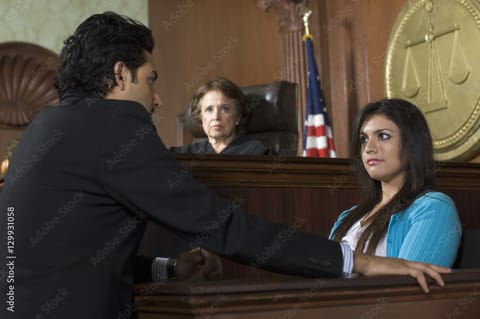
Cross-examination is the stage of a trial at which a lawyer questions a witness called by the opposing side. It is one of the central features of courtroom procedure in common law systems such as those of England and Wales and the United States. Its purpose is to test witness evidence, not to put on trial the person giving it. The freedom lawyers have is wide, but it is far from unlimited.
What cross-examination is for
In a criminal trial, the prosecution usually calls its witnesses first and questions them in what is known as examination-in-chief (or direct examination in the United States). The defence then cross-examines. The roles reverse when the defence calls its own witnesses, including the defendant if they choose to give evidence.
Cross-examination typically has three aims:
- to bring out facts that help the cross-examiner's case;
- to challenge the accuracy or reliability of what the witness has said, for example by pointing to gaps in their view, their memory or the lighting at the scene;
- to raise doubts about the witness's credibility, including any bias, motive or inconsistency with an earlier statement.
Judges and juries then decide how much weight to give the evidence. Lawyers do not decide that, and they do not give evidence themselves.
Leading questions: the key difference
The most visible difference from examination-in-chief is the use of leading questions. A leading question suggests the answer it expects, such as "You were standing at the bus stop, weren't you?" In direct examination these are generally not allowed on contested points, because the witness should tell their own account in their own words. Open questions such as "What did you see?" are the norm.
In cross-examination the position is usually the opposite. Leading questions are normally permitted because the witness is called by the other side and may be reluctant to concede anything. Closed, step-by-step questions let the lawyer control the topic and avoid giving the witness a chance to repeat their earlier account. A judge can still step in if a question is unfair, or if a witness appears to be friendly to the cross-examining party.
Limits on what can be asked
Relevance and the scope of questioning
Questions must be relevant to an issue in the case or to the witness's credibility. In the United States, the federal rules generally confine cross-examination to the subjects covered in direct examination and to credibility, although the judge may allow more, and some states take a broader approach. In England and Wales, cross-examination is generally not limited to the topics raised in examination-in-chief.
Fairness to the witness
Courts do not allow questions that are misleading, argumentative or repetitive. A lawyer should not put a question that assumes a fact not yet proved, nor combine several questions into one so that the witness cannot answer clearly. Judges can also stop questioning that is harassing or oppressive.
In England and Wales, there is also a long-standing expectation that a lawyer will put their client's version of events to a witness who disagrees with it, so that the witness has a chance to respond. This is often called the rule in Browne v Dunn.
Protected and sensitive areas
Some subjects are restricted by law. Communications covered by legal professional privilege generally cannot be explored. Evidence of a witness's past convictions or other bad character is not automatically open to question: in England and Wales, the Criminal Justice Act 2003 sets out when it may be raised, and permission from the court is needed for most witnesses other than the defendant. In the United States, the federal rules set conditions for impeachment by earlier convictions.
Sexual history is tightly controlled. The Youth Justice and Criminal Evidence Act 1999 restricts questions about a complainant's sexual behaviour in England and Wales, and US federal rules contain comparable "rape shield" protections. The same 1999 Act also bars defendants who represent themselves from cross-examining certain witnesses, including complainants in sexual offence cases and child witnesses, so that questions are put through a legal representative appointed by the court.
The role of the judge and objections
The judge controls the questioning. Opposing counsel may object when a question appears to breach the rules, for instance because it is irrelevant, calls for hearsay or is unfairly put. The judge then rules, and the question is either withdrawn, reworded or allowed. In a jury trial, arguments about admissibility are often dealt with in the jury's absence.
Vulnerable witnesses may have special arrangements, such as giving evidence by video link, behind a screen, or with questions put in a more careful form. These measures are meant to help witnesses give their best evidence without limiting the fairness of the trial.
Why the rules matter
The right to challenge the evidence against you is a basic part of a fair trial. In the United States it is tied to the Sixth Amendment's Confrontation Clause, and in England and Wales it is a feature of the fair trial protections recognised in law. The limits on cross-examination try to balance two interests: allowing the accused a proper opportunity to test the case, and protecting witnesses from needless distress or unfair tactics.
For anyone following a trial, it helps to remember that cross-examination is a structured part of courtroom procedure, not a contest of wits. Its worth lies in whether the court is better able to judge what is reliable. Rules and practice vary between jurisdictions, so the position in a particular court always depends on its own law.