
Bankman-Fried: 25-year term upheld, Supreme Court review sought
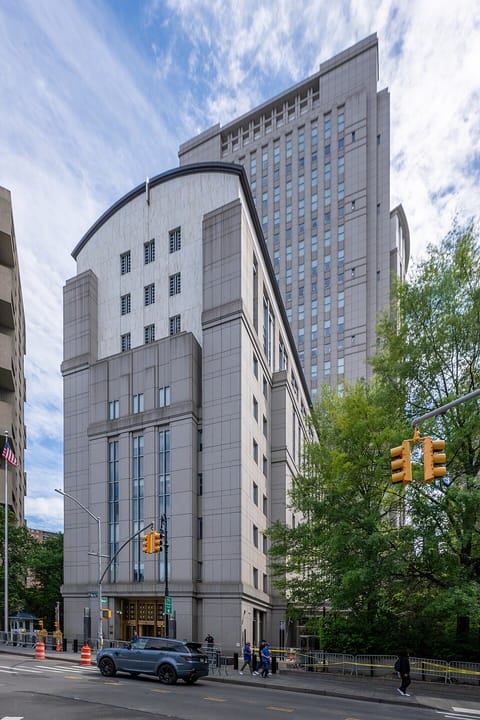
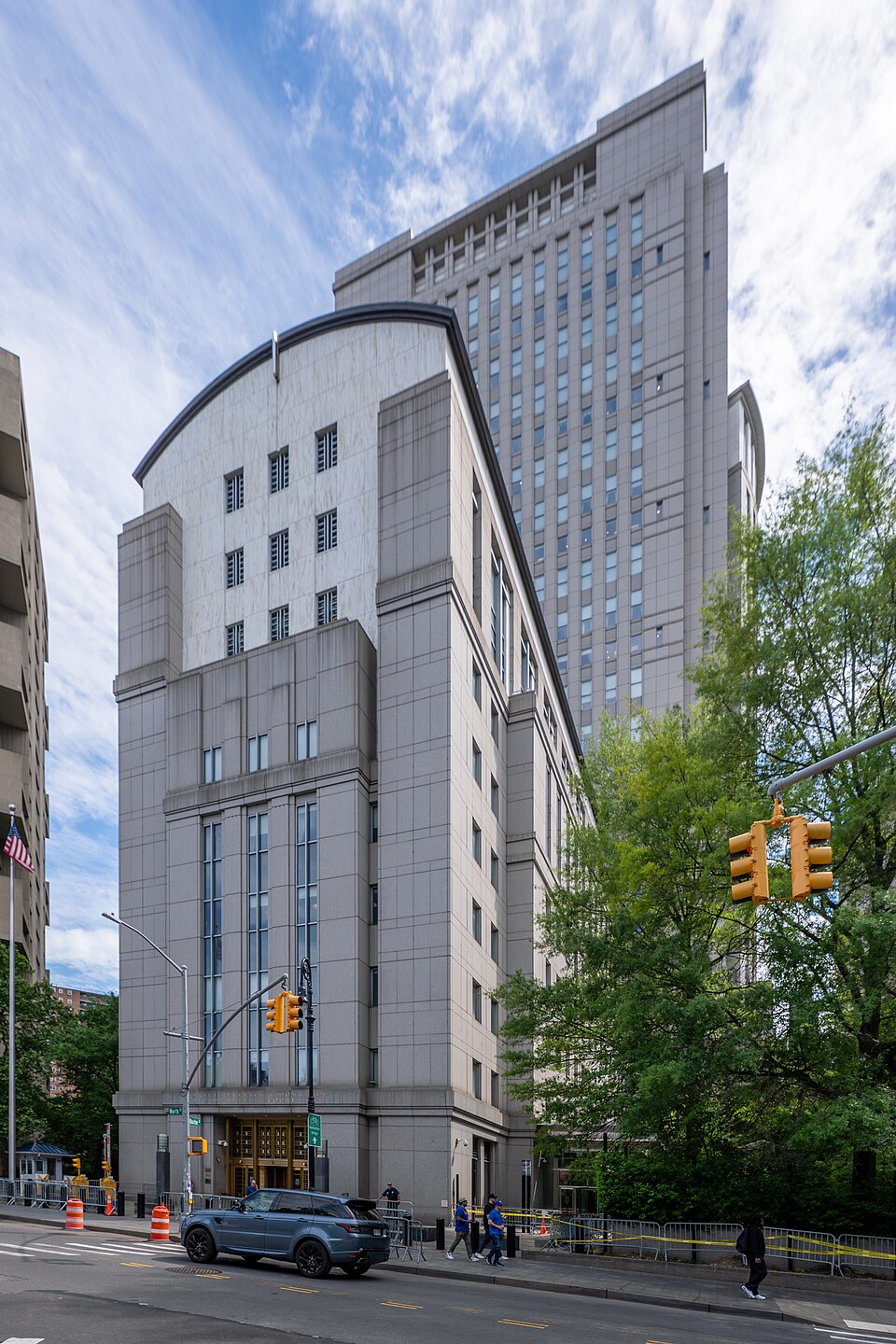
The US Court of Appeals for the Second Circuit, sitting in Manhattan, unanimously upheld Sam Bankman-Fried's fraud convictions and his 25-year prison sentence on 12 June 2026. On 10 September 2026 his lawyers asked the US Supreme Court to review the case, including the forfeiture order of about $11 billion (£8.5 billion). The Supreme Court has not agreed to hear it. Mr Bankman-Fried, the founder of the collapsed cryptocurrency exchange FTX, was convicted by a jury in November 2023. He has consistently said he did not commit fraud. His convictions are not yet final, as further review is still being sought.
The charges and the trial
Mr Bankman-Fried was arrested in the Bahamas in December 2022, shortly after FTX collapsed into bankruptcy, and was brought to the United States to face charges in the Southern District of New York. Prosecutors alleged that he had taken money deposited by FTX customers and used it through his trading firm, Alameda Research, to make investments, repay loans, buy property and fund political donations.
His trial before District Judge Lewis Kaplan began in October 2023. Several former colleagues who had pleaded guilty gave evidence for the prosecution, among them Caroline Ellison, who had run Alameda Research, and FTX co-founder Gary Wang. Mr Bankman-Fried also gave evidence in his own defence. His case was that FTX was fundamentally solvent and that its failure came from a sudden surge of withdrawals, not from deliberate theft.
On 2 November 2023 the jury convicted him on all seven counts after deliberating for less than a day. They covered wire fraud, conspiracy to commit wire fraud, conspiracy to commit securities fraud, conspiracy to commit commodities fraud and conspiracy to commit money laundering.
Sentence and forfeiture
On 28 March 2024 Judge Kaplan sentenced Mr Bankman-Fried to 25 years in federal prison. He also ordered the forfeiture of about $11.02 billion. Forfeiture is a court order requiring a convicted defendant to surrender property or money connected to the offences. Prosecutors had asked for a considerably longer term, while the defence argued for a much shorter one.
Court filings cite Bureau of Prisons figures projecting his release at the end of 2043, when he would be 51. He is held in a low-security federal prison in California.
The direct appeal
Mr Bankman-Fried's new appeal lawyers argued that Judge Kaplan was biased and that the trial was unfair. They also said the judge wrongly stopped the defence from presenting evidence that FTX could have repaid its customers. The appeal was argued before a three-judge panel in November 2025.
In its ruling of 12 June 2026 the panel rejected every argument and described the prosecution's evidence as robust. It held that customers were defrauded when their money was moved to Alameda, however strongly he believed he could later restore it. The court also relied on the Supreme Court's 2025 decision in Kousisis, which confirmed that prosecutors need not prove an intention to cause economic loss to secure a wire fraud conviction.
The new trial motion
Separately, Mr Bankman-Fried filed a motion for a new trial in the District Court, based on what he said was newly discovered evidence. He drafted it himself, without a lawyer. Judge Kaplan denied it in April 2026, and reports say the denial was with prejudice, meaning it cannot be brought again on the same grounds.
The Supreme Court petition
The petition was filed on 10 September 2026 by Stanford law professor Jeffrey Fisher. It was docketed as No. 26-349. It raises two main issues:
- whether the trial court was wrong to limit evidence about FTX's assets and the possibility of repaying customers, given that customers were later repaid through the bankruptcy process;
- whether a forfeiture of this size, which he says he can never pay, is an excessive fine under the Eighth Amendment.
Filing a petition does not mean the justices will hear the case. The Court accepts only a small fraction of the petitions it receives, and four justices must vote to grant review. The petition does not suspend the sentence. According to docket reports, the Court extended the government's deadline to respond to 16 December 2026. After that, Mr Bankman-Fried may reply, and the petition would go to the justices for consideration at a conference.
The pardon request
In June 2026 Mr Bankman-Fried applied to the Department of Justice's Office of the Pardon Attorney for a pardon after completion of sentence. In an interview in January 2026, President Donald Trump said he had no plans to pardon him, and the White House has pointed to those remarks since. In July 2026 the Senate unanimously passed a nonbinding resolution saying he should not receive clemency. The application is listed as pending.
The co-defendants
Four others pleaded guilty and cooperated with the prosecution. Caroline Ellison was sentenced to two years in prison and, according to reports, left federal custody in January 2026. Gary Wang and Nishad Singh, who also pleaded guilty, avoided prison and were sentenced to time served. Ryan Salame, another former FTX executive, received a longer term on separate charges.
Where the case stands
| Date | Event |
|---|---|
| 2 November 2023 | Jury convicts on seven counts |
| 28 March 2024 | 25-year sentence and forfeiture of about $11.02 billion |
| November 2025 | Appeal argued before the Second Circuit |
| April 2026 | Judge Kaplan denies motion for a new trial |
| 12 June 2026 | Second Circuit upholds convictions and sentence |
| 10 September 2026 | Petition filed with the Supreme Court |
The route open to Mr Bankman-Fried is now narrow: a Supreme Court decision on whether to take the case, or clemency from the President. Readers who want the exact wording of the charges, the Second Circuit's opinion and the Supreme Court filings can find them in the public court dockets.