

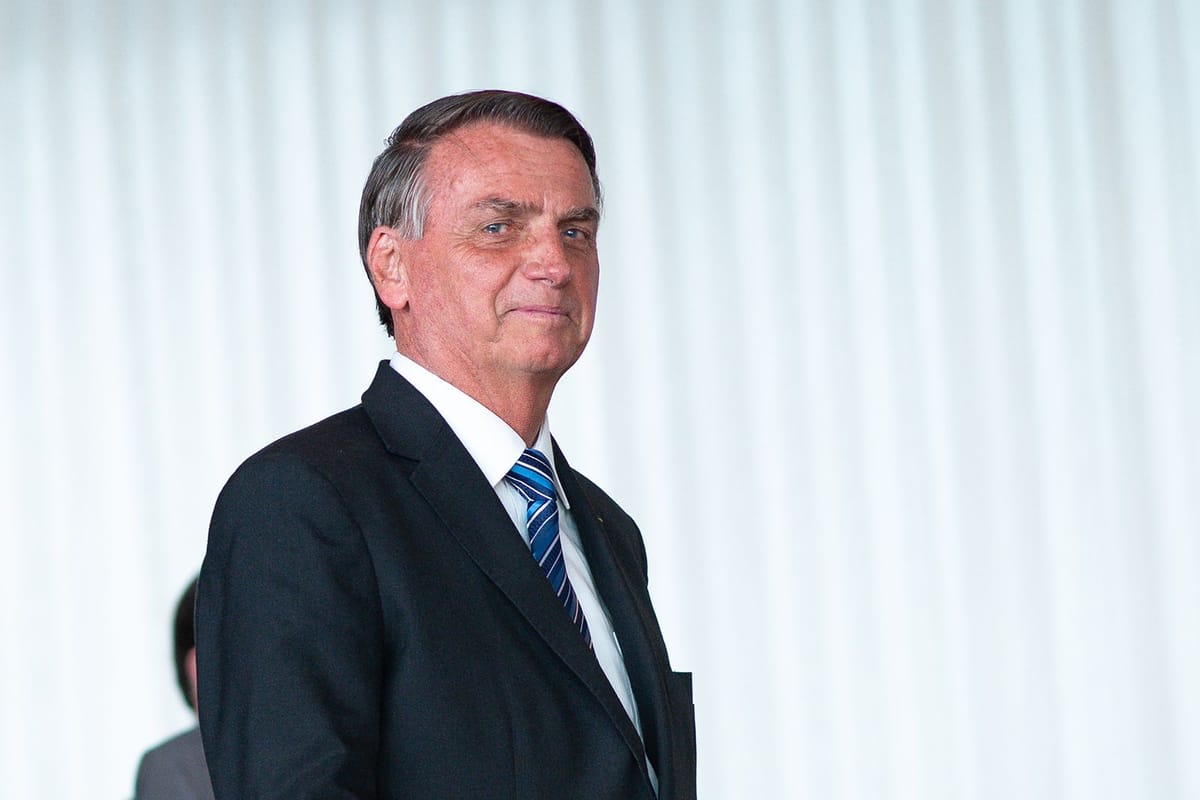
Jair Bolsonaro: the coup conviction, sentence and appeals
Jair Bolsonaro, who was Brazil's president from 2019 to 2022, was sentenced to 27 years and three months in prison on 11 September 2025. A five-justice panel of the Supreme Federal Court in Brasília convicted him of leading an attempt to keep himself in power after losing the 2022 election. He has consistently denied wrongdoing. His conviction became final in November 2025, and he is now serving the sentence under humanitarian house arrest.
Who is Jair Bolsonaro?
Bolsonaro is a former army captain and long-serving congressman who won the presidency in 2018 as a candidate of the political right. He lost the October 2022 run-off to Luiz Inácio Lula da Silva. In 2023 the electoral court barred him from running for office until 2030, a separate ruling from the criminal case. He was stabbed at a campaign event in 2018, and the long-term effects of that injury have featured heavily in his later medical and custody hearings.
The coup case
Prosecutors alleged that Bolsonaro led a group that tried to overturn the result of the 2022 election. They said the plan included a proposal to kill Lula, Vice President Geraldo Alckmin and Justice Alexandre de Moraes, and that it failed mainly because senior military commanders would not back it. The case also drew on the riot of 8 January 2023, when supporters of Bolsonaro stormed government buildings in Brasília a week after Lula took office.
Bolsonaro was tried by the court's panel rather than a jury. Four of the five justices voted to convict him on five counts. These included taking part in an armed criminal organisation, attempting to abolish the democratic rule of law by violence, and organising a coup. Justice Luiz Fux was the only dissenter and voted to acquit. Justice Moraes was the rapporteur, the judge who manages the case and presents it to the panel.
Bolsonaro's defence called the sentence excessive and disproportionate. He and his allies described the prosecution as a political persecution. The United States government under President Donald Trump criticised the case and imposed tariffs and sanctions on Brazilian officials.
Appeals and the final judgment
Under Brazilian law, a sentence is not carried out until the avenues of appeal are exhausted. Bolsonaro's lawyers filed an 85-page motion of clarification on 27 October 2025. Such motions ask a court to correct omissions or contradictions in a ruling rather than to change its outcome. Four of the five panel justices rejected it, and Justice Moraes declared the case closed on 25 November 2025.
The defence then filed a further appeal asking the full 11-member court to annul the trial. It relied on the dissent of Justice Fux. Brazilian practice has generally required at least two dissenting votes before that kind of appeal can substantially change a decision, so the lone dissent was seen as a weak basis.
Custody: from ankle monitor to humanitarian house arrest
Bolsonaro had been under house arrest since August 2025 for breaching precautionary measures in the case. On 22 November 2025 he was detained after the court found he had tampered with his ankle monitor and judged him a high flight risk. He later attributed the episode to hallucinations, a claim Justice Moraes dismissed. He began serving his sentence in a room at federal police headquarters in Brasília on 25 November 2025.
In January 2026 he was moved to the Papuda prison complex in the capital under conditions the court described as more favourable. Several defence requests for house arrest on health grounds were refused. After he was admitted to hospital with pneumonia in March 2026, Justice Moraes granted temporary humanitarian house arrest, first for 90 days, renewable if medically necessary. The terms include electronic monitoring and a ban on phones and social media. The court later kept the arrangement in place, and reports in October 2026 said he remained at home in Brasília.
The sentencing law
Brazil's Congress passed what is known as the dosimetry law, which changes how sentences for crimes against the democratic order are calculated. Instead of adding penalties for each offence, courts would apply the penalty for the most serious one. The law also allows reductions for people convicted as part of a crowd.
President Lula vetoed the bill, but Congress overrode the veto on 30 April 2026. Estimates of the effect on Bolsonaro vary. Some reports suggested a cut of around five years. Others suggested the time he must serve before moving to a less restrictive regime could fall sharply. On 9 May 2026, one day after the law was promulgated, Justice Moraes suspended its application. The suspension was to last until the full court could decide whether the law is constitutional. Until that ruling, the original sentence stands.
Politics after the verdict
Bolsonaro endorsed his eldest son, Senator Flávio Bolsonaro, as the Liberal Party's candidate for the October 2026 presidential election. Flávio campaigned on a pledge to pardon his father. Lula won the run-off on 25 October 2026. Another son, Eduardo Bolsonaro, who lives in the United States, was charged with coercion. Prosecutors accused him of lobbying for American sanctions to influence the coup trial. After the election, Flávio Bolsonaro was reported to have travelled to the United States despite a court order restricting his travel. He had publicly denied any intention to flee.
What to watch
Several questions remain open. The full Supreme Federal Court has yet to settle the fate of the dosimetry law, and Bolsonaro's health will continue to shape the terms of his custody, which the court reviews periodically. His lawyers have also spoken of taking the case to international bodies. Any change to the sentence would have to come through the courts or through legislation that survives constitutional review.