

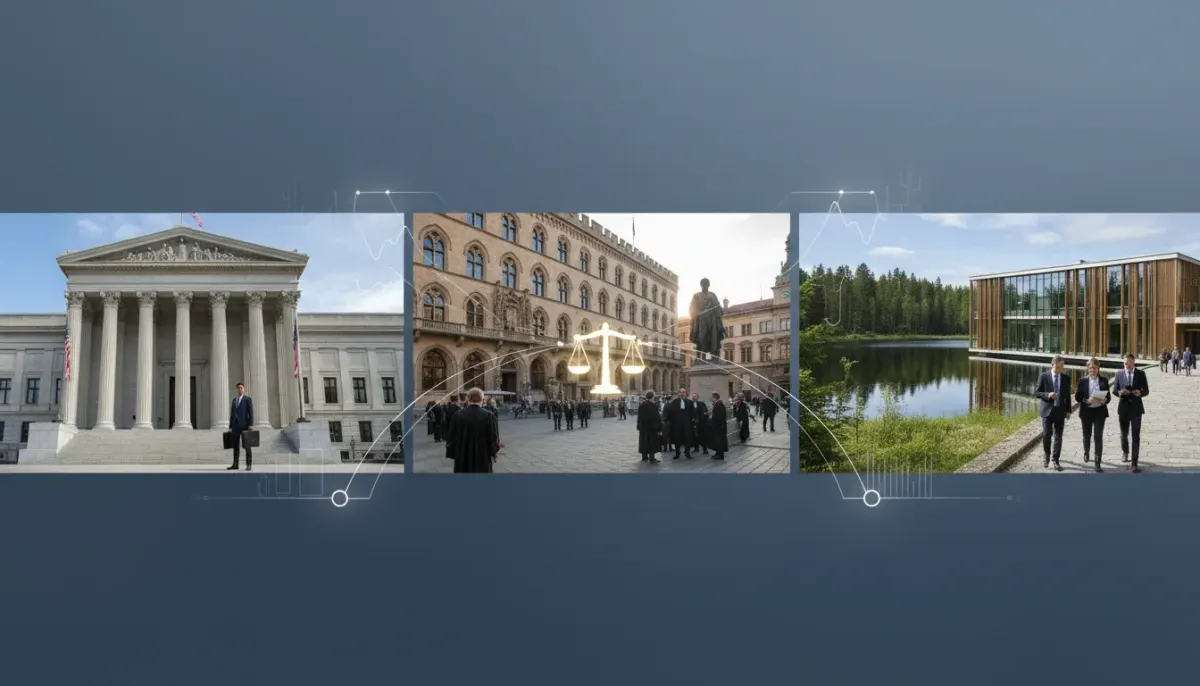
The role of the prosecutor: the US, Italy and Sweden
In every criminal justice system, someone must decide whether a suspect should face a trial and on what charge. That person is usually the prosecutor. Yet the job is not the same everywhere. The United States, Italy and Sweden give prosecutors different powers, different degrees of independence and different duties. This article compares the three.
What prosecutors do
In broad terms, a prosecutor reviews the evidence gathered in a case, decides whether to bring a charge, presents the case in court and may challenge the outcome on appeal. A person who is charged is presumed innocent until a court finds otherwise, and the prosecutor carries the burden of proving guilt. How far the prosecutor also steers the investigation, and how much freedom they have to drop or reduce a case, is where the three systems part ways.
United States: an advocate with wide discretion
American prosecutors belong to the executive branch of government. At federal level, US Attorneys are nominated by the President and confirmed by the Senate. In most states, the local chief prosecutor, often called a district attorney, is elected by voters, although some states use appointment instead. This gives the role a political dimension that is largely absent in the other two countries.
Charging and plea agreements
The defining feature of the American model is discretion. Within the law, a prosecutor may charge, decline to charge, or reduce charges in return for a guilty plea. Plea agreements settle the great majority of cases, so the prosecutor's decisions often determine the outcome long before a jury is sworn in. For serious federal offences, the Fifth Amendment generally requires a grand jury, a panel of citizens, to approve an indictment, which is the formal charge. Practice varies between states.
Duties of disclosure
The system is adversarial, meaning the prosecution and defence present competing cases to a neutral judge or jury. Even so, prosecutors have a constitutional duty, set out in the Supreme Court's 1963 ruling in Brady v Maryland