
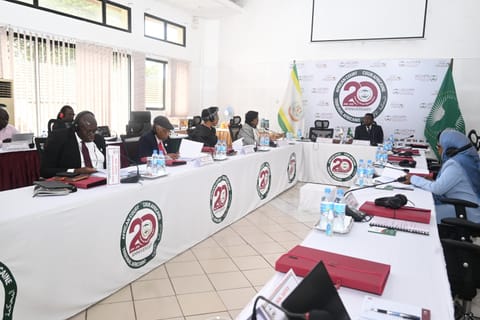
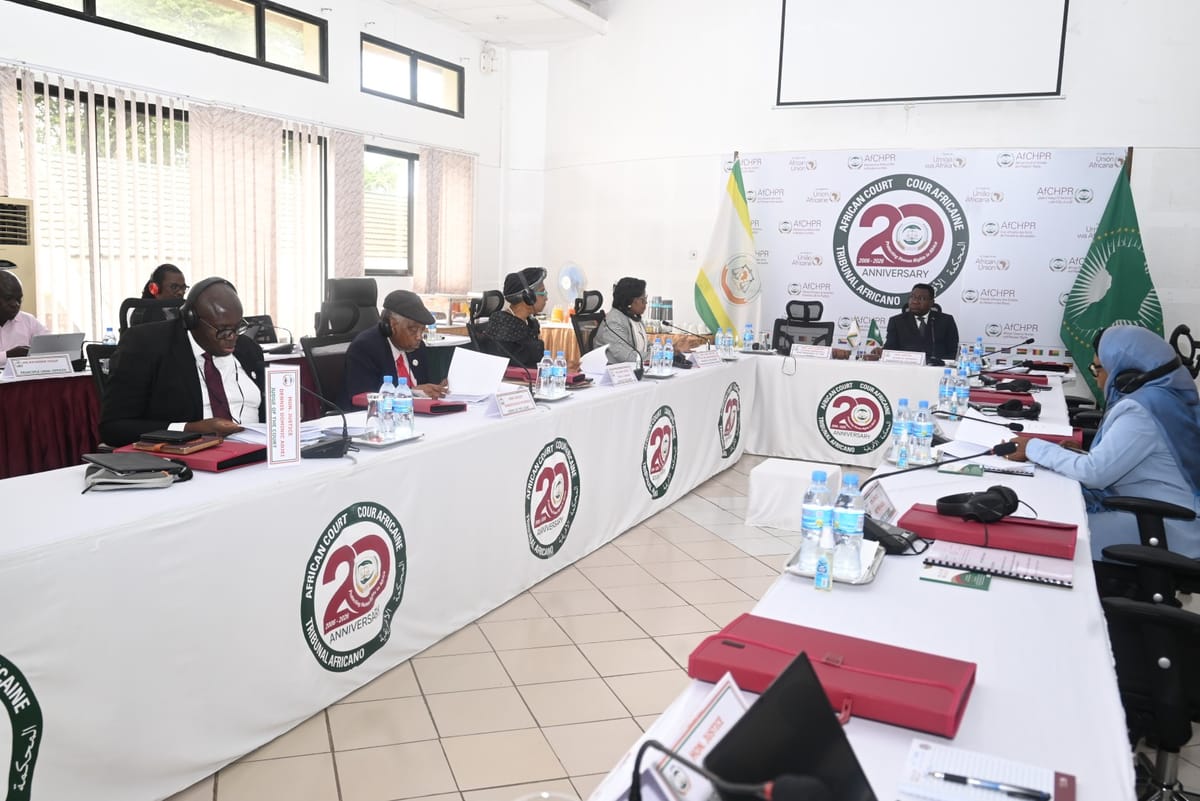
Taking a case to the African Court in Arusha: who can file and how
Most people who feel their rights have been violated by an African government cannot simply file a complaint with the continent's human rights court. Whether a case can be brought depends on who is bringing it and which state is accused. This article sets out the routes to the African Court on Human and Peoples' Rights, the tests an application must pass and what happens afterwards.
A court with a narrow front door
The Court was created by a protocol to the African Charter on Human and Peoples' Rights. The protocol was adopted in 1998 and came into force in January 2004. The Court sits in Arusha, Tanzania, and its judges are elected by the African Union. Like other regional human rights courts, it exists to apply a treaty. Its main yardstick is the African Charter, but it can also apply other human rights treaties that the respondent state has ratified.
Its reach depends on state consent. According to the Court's own published information, 34 of the African Union's 55 member states have ratified the protocol. Only seven of them have made the additional declaration that allows direct access by individuals and organisations.
Who can start a case
The protocol names several possible applicants:
- the African Commission on Human and Peoples' Rights, based in Banjul;
- a state party to the protocol, which may bring a case against another state or join a case as an interested party;
- African intergovernmental organisations;
- individuals and non-governmental organisations with observer status before the Commission, but only against states that have made the special declaration under Article 34(6).
Those seven states are Burkina Faso, The Gambia, Ghana, Guinea-Bissau, Malawi, Mali and Niger. Several others made the declaration and later withdrew it, including Rwanda, Tanzania, Benin and Côte d'Ivoire. The Court has treated a withdrawal as taking effect only after a notice period, and it does not affect cases already lodged.
If the state has not made the declaration
A person in one of the other 27 ratifying states must go first to the African Commission. After a preliminary examination, the Commission may decide to refer the case to the Court. In practice this route has been used rarely, so for many people individual petitions to the Court are not available in any real sense.
What an application must contain
An application is filed in writing with the Registrar in Arusha. It must identify the applicant, the state accused and the rights said to have been breached. It must also set out the facts and the remedy sought. Applicants may write in any of the Court's working languages, which include English and French.
The Court then tests admissibility, using conditions drawn from Article 56 of the Charter. In summary, the application must:
- give the identity of the applicant;
- be compatible with the African Union's founding instrument and the Charter;
- avoid insulting language towards the state concerned;
- not rest only on news reports;
- show that local remedies were used up, unless the process was unduly prolonged;
- be filed within a reasonable time after those remedies ended;
- not concern a matter already settled under the principles of the African Union or the Charter.
The exhaustion rule is the one most often argued. The applicant normally has to show that the national courts, up to the highest level available, have had the chance to deal with the complaint.
From filing to hearing
Once an application is registered, the Registry serves it on the respondent state, which is given time to reply in writing. The parties then exchange written arguments. The Court may deal with preliminary objections about jurisdiction or admissibility first, or alongside the merits. Hearings are normally held in public. The Court may also decide a case on the written record alone.
Applicants do not have to be represented, but many are. The protocol allows the Court to provide free legal assistance where the interests of justice require it, and legal aid has been available through a fund linked to the African Union. Parties may also settle a dispute amicably, with the Court's involvement.
Urgent cases
Where there is a risk of serious and irreparable harm, such as an imminent execution, the Court can order provisional measures. These orders can be made before it has decided whether it has jurisdiction over the full case, and they aim to preserve the situation until the Court rules.
The ruling and its consequences
The Court sits with a bench drawn from its 11 judges. If it finds a violation, it can order remedies, including compensation and other forms of reparation. The result is a binding judgment. It is final and cannot be appealed, though a party can ask the Court to interpret or review it in limited circumstances.
States that are parties to the protocol undertake to comply and to carry out judgments within the time the Court sets. The Court reports each year to the African Union's political bodies, naming states that have not complied. The Executive Council of the African Union is tasked with monitoring execution. The Court has no police or enforcement arm of its own, so compliance depends largely on political will and public pressure. Amnesty International reports that the Court has found violations in more than 100 cases, about two thirds of those it has decided on the merits.
Why access remains the central issue
The Court's own reports and many human rights groups have urged all states to ratify the protocol and make the Article 34(6) declaration. Without that step, a person cannot take a case to the Court directly. Supporters of wider access argue that it would let ordinary people test national decisions against continental standards, including the right to a fair trial. Governments that have withdrawn their declarations have generally pointed to concerns about sovereignty.