
Central Park jogger case: convictions, confession and exoneration
The Central Park jogger case began with a violent attack on a woman in New York City on 19 April 1989. It ended, 13 years later, with the convictions of five teenagers being set aside. It remains one of the best-known US examples of a wrongful conviction, and it is often cited in debates about police interrogation, media coverage and race in the justice system.
The night of 19 April 1989
Crime in New York was at a high point in the late 1980s, and the city was feeling the effects of the crack epidemic. On the evening of 19 April, a large group of teenagers from East Harlem went into the northern part of Central Park. Estimates put the group at between about 20 and 32. Police received reports of cyclists being harassed, a pedestrian being robbed and several joggers being attacked.
Among those hurt was a male jogger who was beaten with a pipe and a stick and badly injured. Separately, a 28-year-old woman who was running in the park was dragged off the path, beaten and raped. She was found about four hours later in a wooded ravine, close to death. She spent 12 days in a coma. In line with the usual practice in sexual offence cases, she is not named here. Many years later she chose to make her identity public herself.
Arrests and confessions
Police detained several teenagers in and around the park that night and in the following days. Six were eventually indicted. They were aged between 14 and 16 at the time of the offences. Five of them became widely known as the Central Park Five: Antron McCray, Kevin Richardson, Yusef Salaam, Raymond Santana and Korey Wise. The sixth, Steven Lopez, had the charges relating to the jogger dropped after he pleaded guilty to robbery in connection with a separate assault.
Much of the prosecution case rested on statements made by the boys after lengthy questioning, some of them recorded on video. The accounts differed from one another on key details. There was no forensic evidence linking any of the five to the woman, and DNA testing at the time did not match any of them. The defence argued that the statements were unreliable and had been given under pressure.
Trials and sentences
The five were tried in two groups in 1990 and were convicted of offences that included assault, robbery and riot. Some were also convicted of sexual offences. Their sentences varied with their ages and the counts involved. Between them they served terms of between seven and 13 years. Appeals against the convictions were unsuccessful.
The case drew intense media attention from the start. Coverage focused on fears about street violence and the behaviour of young people in the city. After the exonerations, the same coverage was widely criticised, and the case was seen as an example of racial profiling and of unequal treatment in the courts and the press.
The confession of Matias Reyes
The case was reopened in 2002. Matias Reyes, a convicted serial rapist who was already serving a long prison sentence, said that he alone had attacked the jogger. His account was backed by DNA evidence, which matched him to the crime scene. Manhattan prosecutors carried out a fresh investigation and concluded that the original convictions could not stand.
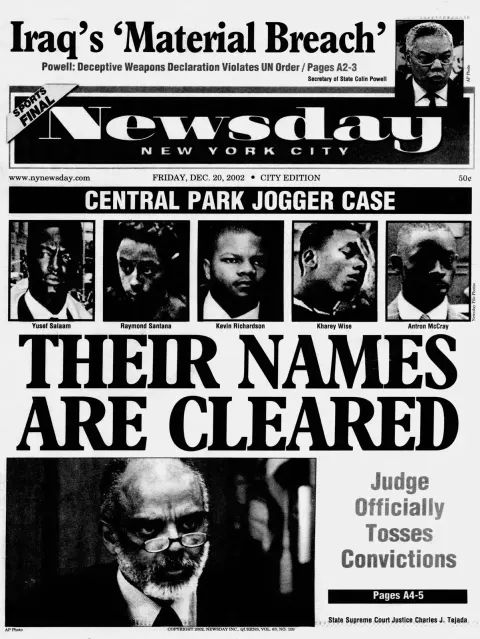
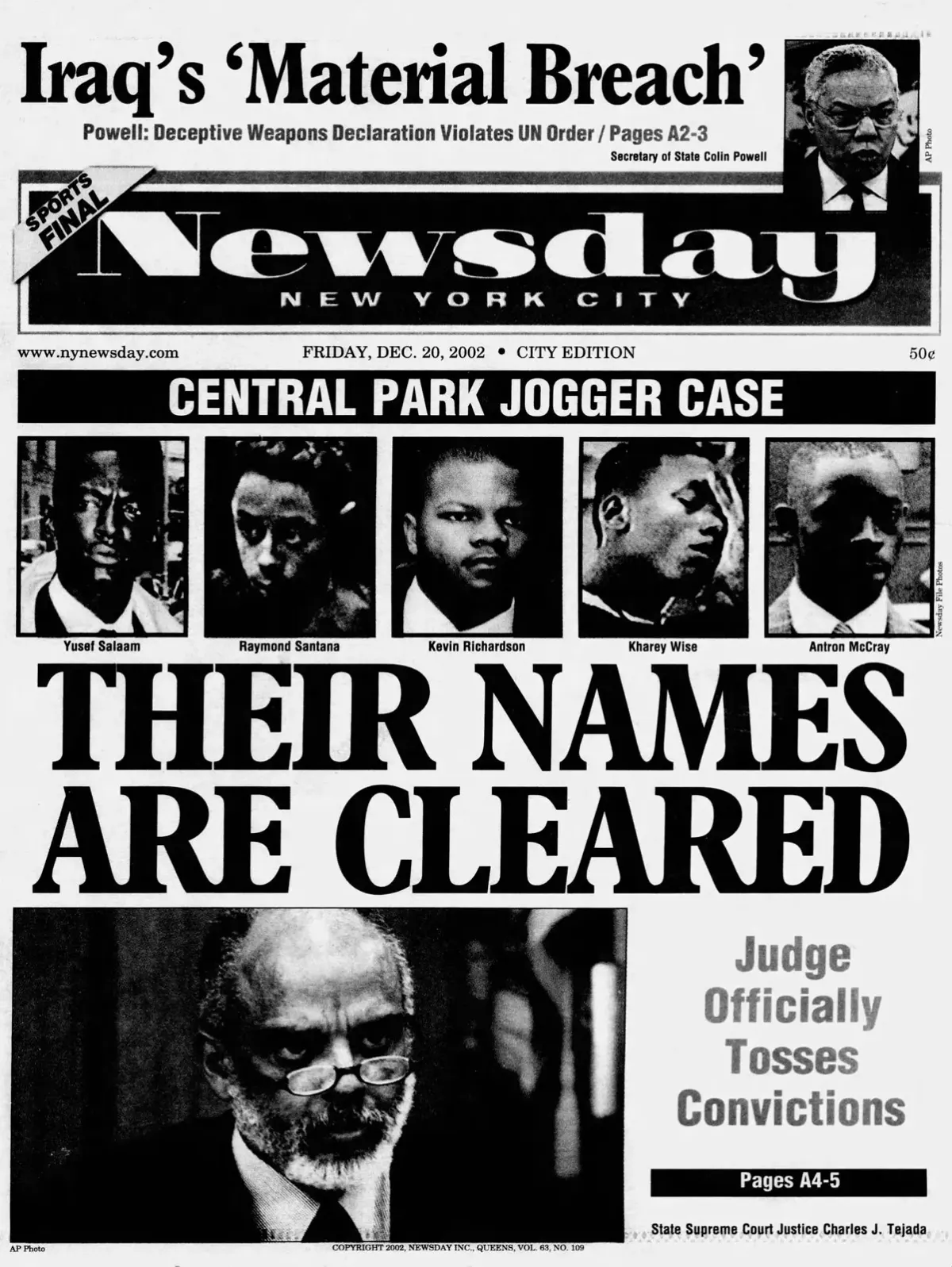
In December 2002 a judge vacated the convictions of the five men. To vacate a conviction means to set it aside, so that it no longer stands in law. This applied to all the charges from that night, including those linked to the other attacks in the park. Reyes was not prosecuted for the jogger attack because the time limit for bringing charges had expired. He was already serving a life sentence for other crimes.
Later developments
The five men brought a civil claim against New York City alleging malicious prosecution, racial discrimination and emotional distress. The city settled in 2014 for $41 million. A separate claim against New York State was settled in 2016 for $3.9 million. In July 2022 a court also vacated the convictions of Steven Lopez, which had arisen from the other attack that night.
The case has had a long public afterlife. A 2012 documentary and a 2019 television drama brought it to new audiences. The men have since been called the Exonerated Five. Yusef Salaam went on to win election to the New York City Council.
Why the case still matters
Legal researchers and reform campaigners often point to the case when discussing false confessions, particularly by young suspects. Several US states have since moved towards requiring police to record interrogations in full, although practice varies. The case is also used as an example of how public pressure after a serious crime can influence an investigation, and of why post-conviction DNA testing and independent reviews matter.
The woman who was attacked survived and rebuilt her life, and her ordeal is an important part of the story. The five men, meanwhile, lost years of their youth to sentences that were later set aside. Together, those facts explain why the Central Park jogger case is still studied in law schools and newsrooms.